
Cornwall Travel Guide: Best Places, Practical Tips, and Perfect Itineraries for England’s Wild West
You step off the train, or roll down the last bend of the A30, and suddenly England feels different. The air is saltier, the light is softer, and on the horizon you see what looks less like a county and more like the edge of a continent. This is Cornwall — a long granite finger pushing into the Atlantic, wrapped in more than 420 miles of coastline, backed by moorland and woods, and criss-crossed by lanes barely wider than a bicycle’s handlebars.
This Cornwall travel guide is your companion to getting past the postcards. It’s for when you want more than a quick list of attractions — you want to know where to stay, how to move, what to eat, and which corners feel right for you, whether you’ve got a long weekend or two unhurried weeks.
Imagine standing above a turquoise cove with the South West Coast Path behind you, a paper-wrapped pasty in your hand, and nothing in front of you but sea and sky. Where should that moment be: Kynance Cove? St Ives Bay? Somewhere on the Lizard that you’ll never quite name on a map? Let’s work that out.
Table of Contents
Getting Your Bearings: The Shape of Cornwall

Look at a map and Cornwall seems simple: a peninsula at the far southwest of England, bordered only by Devon on one side and sea on every other. On the ground, it’s more nuanced. The county covers about 3,563km² (1,376 square miles), with coastline stretching roughly 697km (422 miles) — the longest of any English county.
Around a quarter of this land is protected as an Area of Outstanding Natural Beauty (AONB), which is why even supposedly “ordinary” lay-bys sometimes come with views that would headline other regions’ brochures.
To plan your trip, it’s easier to think in regions:
- North Coast – Atlantic-facing, with big surf, long beaches and high cliffs. Think Bude, Tintagel, Port Isaac, Padstow, Newquay, St Agnes and the sweep of St Ives Bay.
- West Cornwall / Penwith – The far western tip: St Ives, Zennor, St Just, Sennen, Penzance, Newlyn, Mousehole. Raw cliffs, mining heritage and a sense of being very nearly off the map.
- South Coast – More sheltered: Falmouth, the Helford River, Fowey, Mevagissey, Looe and Polperro. Estuaries, woodland walks, sub-tropical gardens and calmer seas.
- The Lizard Peninsula – A world of its own: Kynance Cove, remote fishing coves, inland heath, lighthouse walks.
- Bodmin Moor and Inland Cornwall – Granite tors, the county’s highest hill Brown Willy (420m), rivers, and quiet market towns.
- Isles of Scilly – Technically part of Cornwall, this island cluster lies about 28 miles offshore, reached by ferry or small plane, with pale sand and glassy water.
Where do you fit in that map? Do you want surf and nightlife, quiet creeks, serious hiking, galleries, gardens, or a bit of each? Keep that question parked in your mind; every section that follows will help you answer it.
When to Visit Cornwall
Cornwall is one of the mildest and sunniest parts of the UK, with more hours of sunshine than many inland regions and relatively gentle winters.
The weather is still British — it can change in an hour — but each season has its own character.
Spring (March–May): Wildflowers and Quieter Paths
By March, hedgerows start to wake up. Magnolias, camellias and early rhododendrons burst into bloom in gardens such as Trelissick, Trebah and the Lost Gardens of Heligan, helped by Cornwall’s mild maritime climate.
- Coastal paths feel fresh and relatively uncrowded.
- Sea temperatures are still cold, so swimming and surfing suit the hardy or those in good wetsuits.
- Easter can be busy in classic holiday towns, but inland areas and moorland remain peaceful.
If you like long walks and garden visits with a coat in your bag, this is a beautiful time to come.
Summer (June–August): Beach Days and Long Evenings
From late June through August, this is the Cornwall you’ve probably seen in photos:
- Long daylight hours and warmer sea temperatures.
- Lifeguards on many of the major beaches; families spread across stretches of sand that look like movie sets.
- The south coast feels almost Mediterranean on still days, especially around the Helford and Fal estuaries.
It’s also the busiest season:
- Accommodation in hotspots — St Ives, Padstow, Newquay, Falmouth — can book out months in advance.
- Roads and car parks, especially near beaches and narrow harbour villages, can clog at peak times.
If this is when you must travel, think about staying slightly away from headline towns, using park-and-ride where offered, and exploring lesser-known stretches of the coast.
Autumn (September–November): Soft Light and Warm Seas
September is many locals’ favourite month. The sea is often at its warmest after a summer of sun, but families have mostly gone home. Cliffs are covered in late-summer heather and gorse, and the light across St Ives Bay, Mount’s Bay and the north coast can be extraordinary.
- September and early October are ideal for South West Coast Path walks.
- Gardens are still colourful, particularly those with subtropical planting like Trebah and Trelissick.
- As the season moves on, some smaller businesses shorten opening hours, but most major attractions stay open with reduced crowds.
If you like a slightly quieter, more local-feeling Cornwall with still-reliable weather, autumn is a strong choice.
Winter (December–February): Storm Watching and Slow Travel
Winter in Cornwall is mild compared to many parts of the UK, but this is Atlantic country: you may see huge seas, dramatic skies and powerful winds. On some days, walking along high cliffs in spray and sunshine is unforgettable; on others, you’ll be glad of a pub fire and a bowl of fish stew.
- Some coastal towns, especially St Ives, hold popular festive light displays and events.
- Many gardens, museums and attractions stay open year-round, though some small cafés and seasonal boat trips pause until spring.
- Prices drop, parking spaces appear, and you can sometimes walk a beach with only seabirds for company.
If you enjoy moody weather, cosy evenings and quiet lanes instead of queues, winter can be rewarding — as long as you pack proper waterproofs and flexible plans.
Getting to Cornwall (and Moving Around)
By Train
Trains from London Paddington run down through the West Country to Cornwall, with services continuing to Truro, St Austell, Bodmin Parkway and finally Penzance. Branch lines fan out to:
- St Ives – A short, scenic ride from St Erth, with views across Hayle Estuary and Carbis Bay.
- Falmouth – The Maritime Line from Truro to Falmouth, convenient for town stays without a car.
- Newquay – Seasonal services connect Par and the north coast.
There’s also the Night Riviera sleeper service, which runs overnight between London and Penzance: you go to sleep near Paddington and wake up near Mount’s Bay.
Trains in Cornwall aren’t as frequent as in big cities, but with a bit of planning they’re perfectly workable, especially if you base yourself in one of the towns with a station.
By Car
Driving is still the easiest way to access remote coves, moorland car parks and some small villages.
- From the east, most journeys funnel down the M5 then the A30.
- The A30 is largely dual carriageway but can slow on summer Saturdays when everyone seems to arrive at once.
- Many coastal roads turn into single-track lanes with Cornish hedges on either side. Passing places are part of the dance; you’ll learn to reverse politely and thank generously.
Parking can be tight in harbour villages like Mousehole, Port Isaac and Mevagissey. In St Ives and some other towns, park-and-ride or park-and-coast options help avoid squeezing cars into historic streets.
If you’re nervous about narrow lanes, favour bases with good public transport and use buses, boats and your feet.
By Air
Cornwall Airport Newquay offers seasonal and year-round flights to various UK cities and some European destinations. It also connects with Skybus, which flies to the Isles of Scilly from Newquay, Land’s End and Exeter. Flights take from around 20 minutes (Land’s End) to about an hour (Exeter).
Flying can shave hours off a journey if you’re short on time, but you’ll still need local transport — hire car, bus, or taxi — once you land.
Ferries and the Isles of Scilly
If you dream of taking your Cornwall journey offshore, the Isles of Scilly ferry, Scillonian, sails from Penzance to St Mary’s, usually taking about 2 hours 45 minutes and passing a long run of Cornish coastline.
On the islands, cars are limited; you travel mostly on foot, by bike or by small boat. Think of it as Cornwall distilled: sand, sea, sky and very little hurry.
Getting Around Within Cornwall
- Buses – Routes like those run by First Kernow and Transport for Cornwall link main towns and many villages, but may be infrequent in rural spots or in winter.
- Boats and ferries – Small passenger ferries cross estuaries and rivers: Falmouth–St Mawes, Fowey–Polruan, the King Harry Ferry near Trelissick, summer boats to Trelissick and Truro, and Helford River crossings.
Walking – The South West Coast Path, a 630-mile National Trail, wraps almost continuously around Cornwall, with hundreds of day-walk options from villages and car parks. Cornwall holds nearly half of its length
If you’re imagining a largely car-free trip, base yourself in a town like St Ives, Falmouth, Penzance or Fowey and build an itinerary around trains, buses, boats and your boots.
Where to Stay in Cornwall: Choosing Your Base
With so many pretty places, it’s easy to book at random and end up zig-zagging across the county. A better approach is to choose one or two main bases that match your priorities.
St Ives & Carbis Bay – Art, Beaches and Soft Light
St Ives deserves its reputation: a compact town wrapped around a harbour, backed by several sandy beaches, with Tate St Ives overlooking Porthmeor Beach and the Barbara Hepworth Museum and Sculpture Garden tucked into quiet backstreets.
Stay here if you want:
- Easy access to beaches suitable for families and surfers alike.
- A mix of galleries, studios and small restaurants.
- Car-free options: arrive by train at St Ives or nearby Carbis Bay and walk almost everywhere.
Carbis Bay itself has a station practically on the sand and a calmer feel, with quick connections into St Ives.
Falmouth & the Helford – Maritime Energy and Estuary Calm
Falmouth combines a working harbour, university town atmosphere, beaches and a strong sense of maritime identity. Its harbour, together with Carrick Roads, is one of the world’s deeper natural harbours, and it’s home to the National Maritime Museum Cornwall, with galleries, interactive exhibits and a towering lookout over the water.
Just beyond, the Helford River and nearby coves (like those near Trebah) are all about wooded creeks, small beaches and slower days.
Choose this area if you want:
- A base with year-round life.
- Boat trips, sailing and easy access to gardens like Trebah and Glendurgan.
- Good public-transport links via the Maritime Line.
Padstow, Rock & the Camel Estuary – Food, Cycling and Surf
Padstow’s harbour clusters restaurants, bakeries and delis around a tidal basin, with the Camel Trail cycling route following a former railway along the estuary towards Wadebridge and Bodmin.
Across the water, Rock offers a different feel: dunes, sailing and a quieter residential vibe. The north coast’s big surf beaches and dramatic cliffs sit within a short drive.
Stay here if:
- Food is a big part of your trip.
- You want cycling, estuary walks and easy access to spots like Bedruthan’s cliff tops or Harlyn Bay.
Newquay & the North Coast – Surf and Nightlife
Newquay is built around surfing, with Fistral Beach long established as a hub for British surf culture. The wider area offers a string of bays — Watergate, Mawgan Porth, Crantock — and plenty of schools for beginners.
Choose Newquay if:
- Surfing or bodyboarding is your main focus.
- You want a broad choice of nightlife, from craft-beer bars to late-night clubs.
- You’re travelling with a group that wants an energetic, sociable base.
Penzance, Newlyn & Mousehole – West Cornwall’s Working Heart
Look at a rail map: Penzance is literally the end of the line. From here, Mount’s Bay curves past the working fishing port of Newlyn to the stone harbour of Mousehole, a village of lamorna-granite cottages and narrow streets with strong fishing roots.
Stay here if:
- You want access to Land’s End, Sennen, St Just, Porthcurno, the Minack Theatre and the Lizard.
- You like the blend of everyday life, art studios and working harbour scenes.
- A day trip to the Isles of Scilly is on your list.
Fowey, Looe & Polperro – South Coast Storybook Harbours
On the south coast, Fowey perches above an estuary that once inspired Daphne du Maurier; today it mixes sailing, waterfront pubs and wooded walks.
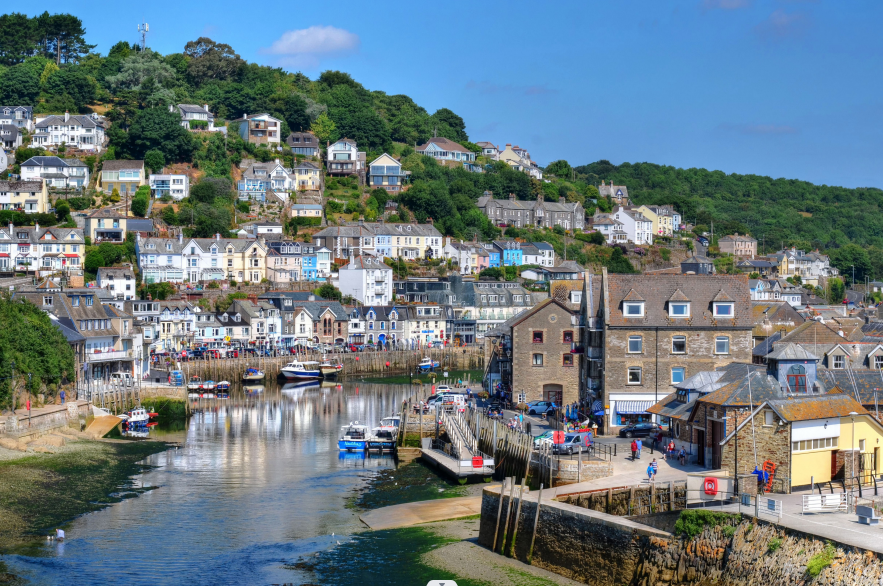
Further east, Looe and Polperro give you harbours, steep streets and a sense of old trading and fishing routes. Bus routes and coast-path links make car-lite days easy.
These towns suit you if you want:
- Estuary swimming and kayaking.
- Quieter south-coast coves within walking distance.
- History and literature threaded through your trip.
You don’t need to pick just one region. Many travellers divide a week or ten days between, say, St Ives and Falmouth, or Padstow and Penzance, giving two different sides of Cornwall without too much time on the road.
Cornwall’s Coast and Beaches: Shoreline in High Definition
Cornwall’s coastline is not a single type; it’s a rolling sequence of cliff, cove, estuary and sand, changing every few miles. With over 300 beaches along those 422 coastal miles, it pays to be selective.
North Coast: Atlantic Energy
On the north coast, the Atlantic hits the cliffs head-on, sculpting rock and sand into long strandlines and high sea stacks.
- Bude & Widemouth Bay – Family-friendly beaches with surf schools and, in Bude’s case, a sea pool carved into the rock.
- Bedruthan area (Carnewas) – Giant rock stacks scattered offshore and a vast beach revealed at low tide. The steps down to the sand are currently closed because of cliff erosion and safety concerns, but the cliff-top views and National Trust café still make this a memorable stop.
- Watergate Bay, Mawgan Porth & Fistral – Wide sands, consistent waves and an energetic surf culture.
- Port Isaac – A steep-sided cove with whitewashed cottages climbing the hillside and working boats still landing crab and lobster on the Platt. The village doubled as “Portwenn” in Doc Martin, but its fishing and maritime character run much deeper than TV fame.
On this coast, waves and rip currents are part of the deal. The RNLI recommends choosing lifeguarded beaches and swimming between red-and-yellow flags, especially where surf is powerful.
West Cornwall: Cliffs, Coves and Atlantic Horizon
Beyond St Ives, the coast turns wilder. Between there and Land’s End, you’ll find:
- St Ives Bay & Godrevy – Curving sands stretching towards Hayle; lighthouse-topped Godrevy headland looking out over reef and waves.
- Zennor & Gurnard’s Head – Some of the most rugged coast-path walking in Cornwall, with cliffs dropping sharply to turquoise sea.
- Sennen & Gwenver – Classic surf beach and a smaller, more tucked-away neighbour; sunsets here can feel almost cinematic.
- Land’s End – Commercialised at the very tip, but cliff walks either side of the complex are dramatic.
Turning the corner into Mount’s Bay, the sea calms and the coast softens.
- St Michael’s Mount, a tidal island crowned by a castle and garden, rises just offshore from Marazion. At low tide, you cross on a cobbled causeway; at high tide, small boats shuttle visitors back and forth
South Coast: Estuaries, Sheltered Bays and Sailing Water
Cornwall’s south coast is often called its “softer” side, but there’s plenty of drama in the detail:
- Around Falmouth, beaches like Gyllyngvase, Swanpool and Maenporth offer swimming, paddleboarding and café stops, all within walking or short-bus distance of the town centre.
- The Roseland Peninsula opposite offers smaller coves, creeks and the fortified headland of St Mawes Castle.
- Whitsand Bay, further east, is a long sweep of sand below high cliffs, popular with surfers but known for steep access paths and strong rip currents, reminding you that even the “gentle” coast has teeth.
Down here, you find sheltered inlets and wooded shores, ideal for sea kayaking and exploring by small boat.
The Lizard Peninsula: Kynance Cove and Beyond
The Lizard feels slightly detached from the rest of Cornwall, a tongue of land with its own geology and character.
- Kynance Cove is the cove you see in a hundred photos: serpentine rock islands rising from turquoise water, white sand, and cliffs that feel almost theatrical. At low tide, caves and coves link up; at high tide, the beach shrinks dramatically.
- Elsewhere, fishing villages like Cadgwith, and quiet coves reached down twisting lanes, give you a slower rhythm.
Tide times matter here more than ever. Plan your visit to Kynance or similarly enclosed coves by checking tide charts and being ready to leave as the sea creeps back in.
Porthcurno, Pedn Vounder and the Far West Coves
Near Land’s End, Porthcurno brings together fine sand, blue-green water and a backdrop of granite cliffs. Perched on those cliffs is the Minack Theatre, an open-air amphitheatre carved largely by hand into rock, where plays and concerts run against a backdrop of sea and stars.
Next door, Pedn Vounder has long drawn visitors for its shallow, clear water and sandbars. In recent years, however, the access path and dangerous rip currents have led the National Trust to close the official route on safety grounds; they now strongly encourage visitors to choose safer, lifeguarded beaches nearby instead.
Whatever beach you choose, this coast rewards curiosity and caution in equal measure: study tide times, look for RNLI flags, and ask locals if you’re unsure.
Walking and Wild Landscapes: Beyond the Beach Towel
If you come to Cornwall and never leave the sand, you’ll miss some of its richest experiences. This is a county built for walkers.
The South West Coast Path: Choose Your Slice
The South West Coast Path (SWCP) runs for about 630 miles from Minehead in Somerset to Poole in Dorset, with nearly half that distance skirting Cornwall’s coasts.
You don’t need to tackle the whole thing — choose sections that match your base:
- St Ives to Zennor – A challenging but spectacular day, with rocky paths, short scrambles and constant sea views.
- Tintagel to Boscastle – Clifftop walking past inlets and headlands, with legends layered into the landscape.
- Lizard circular walks – Loops around the peninsula, linking Kynance, Lizard Point and small fishing coves.
- Falmouth & the Roseland – Softer cliff and estuary walks, often with options to return by ferry.
Expect climbs, steps and sometimes muddy or exposed sections. Hiking shoes or boots are a better choice than casual sandals, even on short strolls.
Bodmin Moor: Granite Tors and Wide Horizons
Head inland and Cornwall changes again. Bodmin Moor is a granite upland of tors, marshes and rough pasture, designated both as an SSSI and part of the Cornwall AONB, with prehistoric remains scattered across it.
The hill Brown Willy, at 420m, is the highest point in Cornwall; nearby Rough Tor is only slightly lower. Walking here, you’ll see:
- Rock outcrops, Bronze Age cairns and traces of ancient settlements.
- Views stretching across the county — on clear days, often to both coasts.
Routes vary from short, family-friendly loops from car parks like Rough Tor to longer, more committing days over open moor. Weather can change quickly, and boggy patches are common, so check forecasts and wear decent footwear.
Woods, Waterfalls and Valley Walks
Cornwall isn’t all open sea and moor. Woodland gorges, river valleys and inland trails include:
- Golitha Falls – A series of cascades on the River Fowey’s upper reaches, set in ancient oak woodland.
- Luxulyan Valley – A steep-sided valley where industrial archaeology — viaducts, leats and tramways — weaves through mossy trees and streams.
These spots feel particularly magical on damp, green days when the coast is wrapped in sea mist.
Gardens, Biomes and Green Havens
Cornwall’s mild climate and sheltered valleys let plants from much warmer parts of the world flourish in open ground. Garden visits are not just for specialist horticulturalists; they’re a big part of understanding this landscape.
Eden Project: Biomes in a Former Clay Pit
On the site of a former china clay pit near St Austell, the Eden Project has transformed a scarred landscape into a complex of vast biomes and outdoor gardens. Inside the domes, you move from tropical rainforest (complete with canopy walkways and humid air) to Mediterranean landscapes, learning how plants and people interact.
Outside, terraces and beds focus on temperate crops, pollinators and climate resilience. It’s part spectacle, part educational project, and worth half a day or more.
The Lost Gardens of Heligan: A Restored Victorian Estate
Not far from Eden, the Lost Gardens of Heligan were literally that — overgrown and abandoned after the First World War until rediscovery and restoration in the late 20th century. Today, they blend:
- Productive walled gardens,
- A “jungle” valley with boardwalks among tree ferns and bamboo,
- Woodland sculptures and viewpoints.
Go if you enjoy layered stories: horticulture, history and quiet corners where you feel the weight of time.
Trebah and Trelissick: Estuary Gardens
South of Falmouth, Trebah Garden drops through a sub-tropical ravine to its own small beach on the Helford River, with giant gunnera, hydrangea valleys and a koi pond fed by a spring that flows the length of the garden.
On the River Fal, Trelissick offers a mix of formal gardens, orchards, and long woodland walks with estuary views, all part of a National Trust estate that’s popular with dog walkers and families.
Both gardens are excellent choices on days when the coast-path wind feels a bit too sharp.
Castles, Legends and Tidal Islands
You can’t walk far in Cornwall without stumbling over a story. Some are folklore, some are hard history, and many sit on cliffs.
Tintagel Castle: Clifftop Ruins and King Arthur Echoes
Perched on headlands and a rocky island on the north coast, Tintagel Castle is managed by English Heritage and associated in legend with King Arthur. A modern footbridge now links mainland and island, replacing older, steeper routes and giving walkers a dramatic approach to the ruins.
Whether or not you care about Arthurian myth, the combination of ruined walls, churning sea and towering cliffs is powerful. Allow time; there are a lot of steps.
St Michael’s Mount: Causeway and Castle Above the Bay
In Mount’s Bay, St Michael’s Mount rises on a tidal island linked to Marazion by a cobbled causeway that appears at low tide and vanishes beneath the water as the tide comes in. The island hosts a medieval church and castle, subtropical gardens clinging to the rock, and a small harbour.
You walk across barefoot or in sturdy shoes when the causeway is exposed, or glide in via small passenger boats at higher tide states. It’s essential to check safe crossing times and book tickets ahead in peak season.
Falmouth’s Pendennis and St Mawes: Twin Fortresses
Guarding the Fal estuary, Pendennis Castle above Falmouth and St Mawes Castle opposite were built in the 16th century under Henry VIII to protect against seaborne attack. Today, they offer:
- Panoramic sea and harbour views,
- Exhibitions on Cornish and wider British maritime history,
- Family-friendly ramparts and grassy spaces.
They’re an easy way to combine history with a half-day out, especially if you link them with boat rides.
Towns and Villages: Harbours, Art and Everyday Life
The soul of Cornwall isn’t only in the landscapes; it’s also in the working harbours, small-town high streets, and clusters of cottages around slipways.
St Ives: Artists’ Light and Sandy Beaches
St Ives is almost a cliché — in the best sense — of a coastal town: tides filling and emptying the harbour, fishing boats resting on sand, and artists chasing the changing light.
- Tate St Ives shows modern and contemporary art, much of it with links to the town’s artist colonies. Its galleries overlook Porthmeor Beach, where surfers dot the line-up.
- The Barbara Hepworth Museum and Sculpture Garden preserves the sculptor’s home, studio and garden, with her works placed among subtropical planting.
Back lanes hide studios, tiny cafés and small independent shops. Avoid trying to drive into the centre; park above town or arrive by train and wander down.
Falmouth: A Harbour with Stories
In Falmouth, ferries, fishing boats, cruise ships and yachts share a deep natural harbour that has seen everything from packet ships carrying imperial mail to round-the-world record attempts.
- The National Maritime Museum Cornwall gives context: local fishing, international exploration, small boats, and special exhibitions (recent years have included the history of surfing in Cornwall).
- The town centre mixes student energy, galleries, and working boatyards — a reminder that Cornwall is not just a holiday set, but a place where people build and repair ships, go to university and raise families.
Stroll the front, take a ferry to St Mawes or Trelissick, and leave time for a swim at Gyllyngvase or Swanpool.
Penzance, Newlyn and Mousehole: Everyday and Extraordinary
Penzance brings together Georgian terraces, art galleries, independent shops and the long promenade around Mount’s Bay. From here, you can hop on the train to St Ives, bus to Land’s End, or ferry to the Isles of Scilly.
Next door, Newlyn remains one of Cornwall’s key fishing harbours, with boats landing a wide variety of fish and shellfish to its market and local processors.
Further along the bay, Mousehole is a compact harbour village where cottages crowd around a small sandy beach, and narrow lanes twist uphill. Its winter harbour lights are famous, but even in daylight the place has a distinctive, close-knit feel.
Padstow and Port Isaac: Food and Fishing Heritage
Padstow sits at the head of the Camel Estuary, once a trading and fishing port, now also a notable food destination with celebrated seafood restaurants and independent bakeries and cafés.
Along the rugged coast, Port Isaac clings to a narrow inlet, its granite and slate houses overlooking a tiny working harbour. Fishermen still land crab and lobster, while sea shanties and TV fame bring visitors.
If you visit, patient parking and walking are essential; streets are steep and narrow, and the fun is in exploring on foot.
Fowey and the South Coast Harbours
Fowey looks across an estuary to Polruan, with yachts swinging to their moorings and wooded slopes rising behind. Literary connections to Daphne du Maurier, who lived nearby and set several works in the area, add depth to the scenery.
Narrow streets climb away from the waterfront, lined with bookshops, delis and old pubs. Estuary walks, boat trips and small beaches accessible by path or ferry complete the picture.
Eating and Drinking in Cornwall: From Pasties to Sea-to-Plate Suppers
Cornwall’s food scene meshes deep-rooted traditions with modern kitchens and a new generation of producers.
Cornish Pasties: More Than a Snack
The Cornish pasty started life as a portable lunch for miners and workers: a semi-circular pastry filled traditionally with beef, potato, swede (often called turnip locally) and onion, folded with a crimped edge that could be held with dirty hands. Today, the Cornish pasty has Protected Geographical Indication (PGI) status, meaning only pasties made in Cornwall to a defined recipe can be marketed under that name.
You’ll find them everywhere, from high-street bakeries to farm shops. The best are freshly baked, with flaky pastry and a peppery filling that tastes of actual vegetables, not just gravy.
Cream Tea: The Jam-First Debate
Few experiences feel more Cornish than sitting in a garden or café with scones, clotted cream and jam. Here, tradition is jam first, then a thick layer of cream; in neighbouring Devon, many locals insist it’s the other way around. The debate is friendly and endless.
Whatever your method, look for:
- Scones that aren’t too sweet,
- Clotted cream so thick it almost holds its shape,
- Local jam, often strawberry or blackberry.
Seafood: From Newlyn Market to Harbour Plates
With such extensive coastline and major fishing harbours like Newlyn, Cornwall has long supplied fresh fish — from hake and turbot to mackerel and cuttlefish — to markets, restaurants and households.
You’ll find:
- Beach shacks grilling mackerel and serving it in soft rolls.
- Harbour-side restaurants whose menus change daily with the catch.
- Fishmongers happy to explain unfamiliar species and how to cook them.
Sustainability matters here. Many restaurants and shops highlight which fish are in season and how they are caught; asking questions helps support better practices.
Farm Shops, Cider and Local Treats
Inland, you’ll pass farm shops and roadside stalls selling:
- Local vegetables and fruit,
- Cider and apple juice,
- Cheeses, chutneys and baked goods.
Pair that with a picnic on a headland and you’ve got a meal as memorable as any restaurant reservation.
If you drink alcohol, Cornish breweries and distilleries produce everything from pale ales to gins and rums — just remember narrow lanes and designated drivers don’t mix.
Cornwall for Different Travellers
Families
Cornwall works well for families of all ages:
- Beaches with lifeguards and gentle slopes into the sea.
- Attractions like the Eden Project, National Maritime Museum Cornwall, and farm parks or seal sanctuaries.
- Short coast-path loops that feel adventurous without being too exposed.
Look for self-catering cottages or family-friendly holiday parks with play areas and pools if you want downtime between excursions.
Walkers and Hikers
If walking is your focus, consider:
- A multi-day South West Coast Path section, using baggage-transfer services.
- A base near Bodmin Moor for tor-bagging and moorland routes.
- Shoulder-season travel (spring or autumn) for cooler temperatures and fewer crowds.
Surfers and Swimmers
For surfing, the north coast is your natural playground: Newquay, St Agnes, Bude, Sennen and many spots between. Lessons and board hire are widely available.
For wild swimming, sheltered south-coast coves, estuaries and calmer north-coast days are best. Always:
- Read local advice,
- Watch the water before you go in,
- Avoid swimming alone or in large surf,
- Prefer lifeguarded beaches where possible.
Car-Free Travellers
If you’d rather not drive:
- Base in St Ives, Falmouth, Penzance or Newquay for good train and bus links.
- Use ferries for estuary crossings.
- Combine walks with public transport — the coast path often connects with bus routes at headlands and villages.
A car-free trip takes more planning, but it’s entirely possible and often more relaxing than wrestling with single-track lanes.
Sample Itineraries
These are not rigid timetables, but frameworks to help you imagine your days.
3-Day Highlights (No Car Needed)
Base: St Ives or Falmouth.
Day 1 – St Ives and the Bay
Arrive by train. Explore St Ives: harbour, beaches, Tate St Ives, and the Barbara Hepworth Museum if you’re inclined. Walk to Porthminster Beach for a late-afternoon swim, then watch the light change over Porthmeor.
Day 2 – Coast Path & Villages
Take a short bus or train hop (e.g., to Lelant or Carbis Bay) and walk back along the coast path to St Ives, or in Falmouth’s case, hop a ferry to St Mawes, explore, then walk a section of the coast before returning by boat.
Day 3 – Gardens or Maritime History
From St Ives, take a day trip by bus or train to St Michael’s Mount or to Penzance and Mousehole. From Falmouth, choose the National Maritime Museum Cornwall and a harbour walk, or head by boat or bus to Trebah or Trelissick for a garden day.
7-Day Road Trip Loop
Day 1 – Bude to Padstow
Enter Cornwall via Bude, stretch your legs on the coast path, then follow the north coast past Tintagel to Padstow for the night.
Day 2 – Padstow, Camel Estuary & Bedruthan Cliffs
Cycle a section of the Camel Trail, then drive to the Carnewas/Bedruthan area for cliff-top views. Continue to Newquay or Mawgan Porth.
Day 3 – Newquay to St Ives
Enjoy a morning surf or beach walk, then take the coast road via St Agnes and Portreath to St Ives.
Day 4 – St Ives & West Cornwall
St Ives day, or a coast-path walk towards Zennor. Evening in town.
Day 5 – Land’s End, Sennen & Porthcurno
Drive through St Just to Sennen, then on to Land’s End and Porthcurno. Visit the Minack Theatre if performances or tours are running, and overnight near Penzance or Mousehole.
Day 6 – Mount’s Bay & Lizard Peninsula
Morning on St Michael’s Mount (check tide times), then cross to the Lizard for Kynance and Lizard Point. Overnight on the Lizard or near Falmouth.
Day 7 – Falmouth, Gardens & Homeward
Visit Falmouth, the Maritime Museum, or gardens like Trebah/Trelissick, then begin your journey home.
You can slow this down by adding extra nights in places that call to you; Cornwall rewards lingering.
Practical Tips That Make a Big Difference
Respecting the Sea
The sea looks inviting, but Cornish waters can hide rip currents, sudden drop-offs and fast tides. The RNLI’s core advice:
- Choose lifeguarded beaches where possible.
- Swim between the red-and-yellow flags.
- If you’re caught in a rip, don’t try to swim straight back to shore; stay calm, float, and either wade or swim parallel to the beach until you’re out of the current, then head in.
For small or remote coves, seek local advice and never underestimate a rising tide.
Driving and Parking
- Expect single-track lanes. If you’re not used to them, drive slowly, use passing places courteously, and avoid last-minute braking.
- Park only where it’s permitted; verges and narrow roadside spaces quickly become blocked in summer.
- Consider leaving your car at your accommodation for some days and travelling on foot, bus or boat.
Dogs, Access and the Countryside Code
Cornwall is broadly dog-friendly but:
- Some beaches impose seasonal dog bans or time restrictions; local councils and Visit Cornwall maintain lists and signs.
- Keep dogs under close control near livestock and on cliff paths.
- Follow the Countryside Code: close gates, don’t trample crops, and take litter away with you.
Booking and Seasonality
- Accommodation in popular towns can sell out many months ahead for school holidays.
- Popular attractions like the Eden Project and some gardens use timed tickets in peak periods; booking online avoids disappointment.
- In winter and early spring, check opening times — some smaller venues close or run reduced hours.
Travelling Lightly
Tourism is vital to Cornwall’s economy, but it also puts pressure on housing, roads and the environment. You can help by:
- Supporting independent businesses and local producers.
- Using public transport or walking where practical.
- Respecting residential streets, especially in small villages already under strain from second homes.
- Leaving places as you found them — or cleaner.
Closing Thoughts: Finding Your Own Cornwall
No single article, however detailed, can give you every cove, every shortcut or every café table with the perfect view. And that’s part of the appeal.
Cornwall is big enough to hold surfing beaches and silent churches, cliff-edge theatres and working fish markets, globally known attractions and nameless lay-bys where you watch a squall sweep across the sea. It’s shaped by weather, tides, industry and visitor seasons, but also by the rhythm of everyday life.
So where will you start?
Maybe with the obvious: a beach, a pasty, a coastal walk. Then, once you’ve found your feet, follow a side lane. Step into a small gallery. Take the ferry instead of the car. Walk five minutes beyond the signposted viewpoint.
Somewhere between a cliff-top path at sunset and a bus ride through hedgerows you can almost touch, you’ll find your own version of Cornwall — one that goes beyond lists and into memory.
References
Geography of Cornwall – coastline length, area and highest point
https://en.wikipedia.org/wiki/Geography_of_Cornwall
Brown Willy – highest point in Cornwall (420m)
https://en.wikipedia.org/wiki/Brown_Willy
Bodmin Moor – geology, designation and character
https://en.wikipedia.org/wiki/Bodmin_Moor
South West Coast Path – National Trail overview and route changes
https://www.southwestcoastpath.org.uk/
Visit Cornwall – official tourism board (general travel, beaches, things to do)
https://www.visitcornwall.com/
Visit Cornwall – Things to do in Cornwall (activities and attractions)
https://www.visitcornwall.com/things-to-do
Eden Project – biomes, reclaimed clay pit and educational mission
https://www.edenproject.com/
The Lost Gardens of Heligan – restored historic gardens and “jungle” valley
https://www.heligan.com/
Trebah Garden – 26-acre sub-tropical ravine garden to private beach on the Helford River
https://www.trebahgarden.co.uk/
Trelissick – National Trust estuary garden and woodland estate
https://www.nationaltrust.org.uk/visit/cornwall/trelissick
Kynance Cove – National Trust information on geology, access and character
https://www.nationaltrust.org.uk/visit/cornwall/kynance-cove
St Michael’s Mount – tidal island, causeway and visitor information
https://www.stmichaelsmount.co.uk/
Tintagel Castle – English Heritage site overview and visitor info
https://www.english-heritage.org.uk/visit/places/tintagel-castle/
National Maritime Museum Cornwall – mission, collections and exhibitions
https://nmmc.co.uk/
Isles of Scilly Travel – Skybus flights, Scillonian ferry and distance from mainland
https://www.islesofscilly-travel.co.uk/
RNLI – rip current and beach safety advice
https://rnli.org/safety/know-the-risks/rip-currents
https://rnli.org/safety/beach-safety
Devon & Cornwall Police – rip current guidance and local beach safety notes
https://www.devon-cornwall.police.uk/police-forces/devon-cornwall-police/areas/about-us/local-support-and-guidance/drowning-prevention-and-water-safety/rip-currents/
Carnewas and Bedruthan Steps – access restrictions and cliff safety
https://cornwallone.co.uk/activities/bedruthan-steps/
https://www.nationaltrust.org.uk/visit/cornwall/carnewas-at-bedruthan/step-closure-at-carnewas-at-bedruthan
Trelissick and Trebah – garden descriptions and best time to visit
https://www.greatbritishgardens.co.uk/cornwall/item/trelissick-gardens.html
https://visit-cornwall-restored.vercel.app/things-to-do/gardens/trebah-garden
Tate St Ives and Barbara Hepworth Museum – art galleries and sculpture garden
https://www.tate.org.uk/visit/tate-st-ives
https://www.tate.org.uk/visit/tate-st-ives/barbara-hepworth-museum-and-sculpture-garden
Falmouth – harbour, history and tourism overview
https://en.wikipedia.org/wiki/Falmouth%2C_Cornwall
https://falmouth.co.uk/
Mousehole and Port Isaac – fishing village descriptions and tourism context
https://visit-cornwall-restored.vercel.app/destinations/mousehole
https://visit-cornwall-restored.vercel.app/destinations/port-isaac
Newlyn Fish Market – fishing port and seafood supply
https://www.countysignscornwall.co.uk/project/newlyn-harbour-fish-market/
https://www.trelawneyfish.co.uk/history/
Cornish pasty – traditional filling and PGI status
https://en.wikipedia.org/wiki/Pasty
Cornish and Devon cream teas – jam and cream traditions
https://en.wikipedia.org/wiki/Cream_tea
Cornwall climate and sunshine – mild, sunny conditions and coastline description
https://www.johnfowlerholidays.com/foxy-blog/what-do-cornwall
https://www.stayincornwall.co.uk/handbook/about-cornwall