
New York City Travel Guide: Best Places to See, Eat and Do in NYC
New York City doesn’t introduce itself gently. It drops you into the middle of the story and expects you to keep up. You step out of the subway, the train doors slide shut behind you, and suddenly there it is: steam drifting from a street vendor’s cart, a yellow cab leaning on its horn, someone rushing past with a cello on their back, the outline of a familiar tower hovering above a canyon of glass and brick.
This New York City travel guide is for travelers who want more than a checklist. You might be planning your first trip and feeling overwhelmed by all the choices, or you might be returning and wondering what you missed last time. Either way, think of this as a detailed, no-nonsense companion that walks beside you—on the subway, across the bridges, through the parks, and into the tiny restaurants where the best conversations happen.
We’ll move borough by borough, neighborhood by neighborhood, focusing on experiences that will still make sense months or years from now: parks and skyline views, timeless museums, long-running eateries, local rituals, and practical details that actually matter when your feet are sore and your phone is at 4%.
Ready to design a New York City trip that feels like your version of the city, not somebody else’s? Let’s start before you even land.
Table of Contents
Planning Your Trip to New York City
How long do you really need?
You can taste New York in three days; you can start to know it in a week.
- 3 days: Focus on Manhattan, with one foray to Brooklyn or Queens.
- 5–7 days: Add more neighborhoods, a broader food circuit, and time to simply wander and sit in parks.
Ask yourself: do you want your days to be packed from breakfast to midnight, or do you prefer slow mornings and long lunches? NYC can handle either approach, but being realistic about your pace will help you choose where to stay and what to prioritize.
When to visit
Weather and daylight hours will shape your days more than any attraction list.
- Spring (April–early June) brings mild temperatures and blooming trees in Central Park and neighborhood streets.
- Summer (June–August) is hot, humid, and full of outdoor events—great for rooftop evenings, riverfront walks, and baseball games, tougher for all-day museum marathons.
- Fall (September–early November) mixes comfortable weather with crisp evenings and fall colors in the parks.
- Winter (late November–March) is cold and often windy, but also quieter at some attractions, with cozy indoor time in museums and cafés.
Whatever the season, plan for layers and shoes you can walk in all day. A bad coat or bad footwear will undo even the best itinerary.
Choosing where to stay: pick your “home” neighborhood
New York is made up of five boroughs—Manhattan, Brooklyn, Queens, the Bronx, and Staten Island—each functioning almost like its own city.
Most first-time visitors stay in Manhattan or parts of Brooklyn and Queens well served by the subway. Here’s how to think about the main options:
- Midtown Manhattan (Times Square, Bryant Park, Grand Central area)
Great transit connections and walkability to many famous sights. Nights are bright and busy. Rooms run smaller and pricier, but it’s convenient if you want to maximize sightseeing and minimize transit learning curves. - Downtown Manhattan (SoHo, Greenwich Village, Lower East Side, Financial District)
More atmospheric streets, historic buildings, and food options. SoHo and the Village feel neighborhood-y; the Financial District is quieter at night but close to ferries and the Statue of Liberty departure point. - Brooklyn (Williamsburg, Brooklyn Heights, DUMBO, Park Slope)
Ideal if you care about cafés, smaller restaurants, and a more residential feel. You’ll trade five extra subway stops for a more relaxed base and great skyline views. - Queens (Long Island City, Astoria)
Long Island City offers quick subway rides to Midtown plus waterfront parks with postcard views. Astoria adds Greek bakeries, Middle Eastern spots, and a lived-in, local atmosphere.
Think about what you want to walk out your hotel door into: neon and crowds, tree-lined side streets, or waterfront parks at sunset.
How to Get Around New York City Without Losing Your Cool
The subway: your best friend after day one
The New York City Subway runs 24/7 and serves four of the five boroughs—Manhattan, Brooklyn, Queens, and the Bronx—with an extensive network of lines.
At first glance, the map looks like a plate of noodles. Give it a day. Once you know a few basics, everything gets simpler:
- Uptown vs. Downtown: In Manhattan, “uptown” trains go north (street numbers rising), “downtown” trains go south.
- Local vs. Express: Local trains stop at every station; express trains skip some. On station signs, check whether both services stop or just one.
- Letters and numbers: Lines are identified by letters (A, C, E) or numbers (1, 2, 3, etc.), not colors, even though each route family shares a color on the map.
Most visitors now pay fares using OMNY, the contactless system that lets you tap a credit or debit card, phone, or wearable on the turnstile to ride. Weekly fare caps mean that after a certain number of paid rides in a week, additional ones are effectively free, which is perfect if you’re staying several days. As MetroCards are phased out, OMNY will become the default for nearly everyone.
Download an offline-capable transit app or the official subway map from the MTA; both cover all five boroughs and help route you even if you lose signal underground.
Walking: the city-sized treadmill
If you’re reasonably mobile, you’ll probably walk more here than almost anywhere else you’ve been. Manhattan’s grid makes navigation intuitive: avenues generally run north–south, streets east–west. Once you grasp that one block east–west often feels longer than one block north–south, you’ll understand why locals sometimes take the subway one stop instead of walking across town.
Bring shoes that can handle 15,000 steps, and schedule short breaks—coffee stops, a bench in a small park, a quick museum gallery—to reset.
Buses, taxis, and bikes
- Buses fill in gaps where the subway doesn’t run directly, especially for cross-town journeys. Tap with OMNY just like on the subway.
- Yellow cabs and ride-hailing apps are useful late at night, during heavy rain, or for shorter hops when the subway route would be awkward.
- Citi Bike, the city’s bike-share program, is great for confident cyclists on waterfront or park-adjacent routes, like along the Hudson River Greenway or in Brooklyn Bridge Park. Stick to protected lanes when possible, and always watch for turning cars and opening cab doors.
Learning the Shape of the City: The Five Boroughs
You don’t need to memorize every neighborhood, but understanding the basic character of each borough makes planning much easier.
Manhattan

Manhattan is what many people picture when they think of New York: dense skyscrapers, Central Park, the Theater District, glitzy Fifth Avenue, and downtown’s towers by the water.
Within that slender island, neighborhoods change quickly:
- Midtown’s vertical avenues meet streets lined with theaters and flagship stores.
- Downtown, the grid twists into narrow, older streets around Wall Street and the historic harbor.
- Uptown, brownstone rows in the Upper West Side and East Side frame the edges of Central Park, while Harlem mixes music venues, historic churches, and restaurants that tell the story of the neighborhood’s African American, Caribbean, and Latin communities.
Brooklyn

Brooklyn feels like a patchwork of small towns that grew together. Walkable streets, independent shops, and neighborhood restaurants dominate the experience.
You can:
- Stroll along the Brooklyn Heights Promenade with one of the best skyline views in the city.
- Wander cobbled streets and warehouses in DUMBO, now converted into galleries, cafés, and lofts.
- Explore Williamsburg and Greenpoint for nightlife, music venues, and inventive dining.
- Spend an afternoon in Park Slope and Prospect Park, where playgrounds, open meadows, and forested paths give you a breathing space from the city’s intensity.
Queens
Queens is one of the most ethnically diverse urban areas in the world, and you’ll feel it most strongly through food.
Here, you can eat in a handful of blocks what would take entire countries to taste elsewhere: South Asian dishes in Jackson Heights; Chinese, Taiwanese, and Korean food in Flushing; Greek, Middle Eastern, and Balkan flavors in Astoria; Latin bakeries scattered in between.
Queens also offers waterfront parks with big-sky views of Manhattan in Long Island City, plus culture-heavy stops like the Museum of the Moving Image and MoMA PS1.
The Bronx
The Bronx mixes major attractions with everyday city life. Many visitors come specifically for:
- The Bronx Zoo, one of the largest zoos in the United States.
- New York Botanical Garden, with large conservatories, seasonal displays, and forested trails.
- Yankee Stadium, if you want to watch the Yankees play a home game.
Beyond those, stroll Arthur Avenue for classic Italian bakeries and old-school restaurants, or seek out Wave Hill’s gardens overlooking the Hudson River.
Staten Island
Staten Island is the most residential of the boroughs, but it plays a key role in many trips thanks to one thing: the Staten Island Ferry. The orange boats shuttle passengers between Lower Manhattan and St. George at no cost, offering open-air views of the skyline and the harbor that many visitors prefer to some paid cruises. Once you arrive, you can either turn around and ride back or stay to explore Snug Harbor, waterfront promenades, or the quieter green center of the island.
Manhattan: The Classic New York City Experience
If your time is limited, Manhattan will likely take the bulk of your days. Rather than jumping randomly between sights, think in clusters.
Midtown: towers, theaters, and street-level chaos
Midtown stretches roughly from 34th to 59th Street and holds many of the names you’ve seen in movies:
- Observation decks like those at the Empire State Building, Rockefeller Center, and Hudson Yards give you different angles on the skyline. Choose one or two rather than trying to do them all; each visit takes time, especially at sunset.
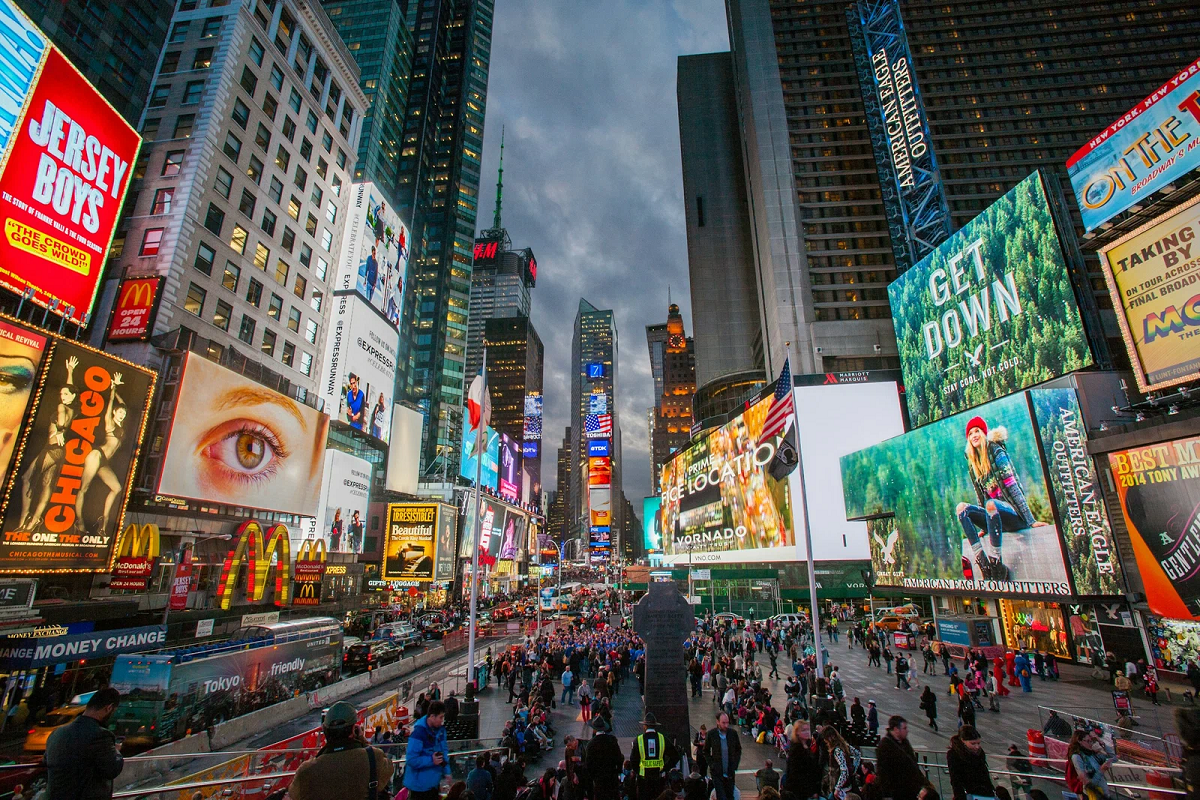
- Times Square is more about sensory overload than deep meaning: billboards, costumed characters, ticket booths, and crowds. It’s worth walking through once, preferably at night, but you don’t need to linger long unless you’re heading to a show.
- Bryant Park and the New York Public Library offer a softer corner of Midtown. Pick up coffee, grab a chair, and watch office workers and visitors share the same patch of lawn.
If you’re seeing a Broadway show, you’ll likely be in or around Midtown. Broadway theatre generally refers to productions in 41 professional theaters with 500 or more seats clustered around the Theater District and parts of Lincoln Center.
Most shows run eight performances a week, often with matinees on Wednesdays, Saturdays, or Sundays. Same-day discount tickets are available at TKTS booths, while some productions hold digital lotteries or “rush” tickets for cheaper last-minute seats.
Ask yourself: do you want a splashy musical with giant sets, an intimate play focused on performances, or something experimental Off-Broadway? Booking in advance gives you the best seat choices, but last-minute deals can add delightful spontaneity to your nights.
Central Park and Uptown: the city’s giant shared backyard
Central Park stretches over 800 acres between the Upper West Side and the Upper East Side, with meadows, lakes, woodland paths, and playgrounds woven into one massive green rectangle. It’s one of the most visited urban parks in the United States, drawing tens of millions of people every year.
You could spend an entire day here and still feel like you’ve missed half the park. Some highlights that stay rewarding year-round:
- The Mall and Bethesda Terrace, with their wide promenade, fountain, and lake views.
- The Great Lawn, where locals sunbathe, toss frisbees, or lie with books.
- Strawberry Fields, a quieter memorial to John Lennon.
- The North Woods and Harlem Meer, where the city seems to dissolve into water and trees.
The Central Park Conservancy, a nonprofit that manages most day-to-day care of the park, offers official walking tours and maintains visitor centers where you can get maps and info on restrooms, events, and seasonal activities.
On the park’s edges, entire days can be built just from museums:
- On the Upper East Side, the Metropolitan Museum of Art and the Guggenheim anchor “Museum Mile.”
- On the Upper West Side, the American Museum of Natural History stretches across multiple city blocks, mixing dinosaur skeletons, dioramas, and space displays.
Downtown Manhattan: history, water, and skyline views
Head south and the grid tightens, streets curve, and the air feels a little saltier.
- Lower Manhattan holds Wall Street, the New York Stock Exchange, and the charging bull sculpture, but it also offers quiet corners like Trinity Churchyard and stone-paved lanes by Stone Street, lined with restaurants and bars.
- At the 9/11 Memorial, twin reflecting pools sit where the Twin Towers once stood, with victims’ names engraved into the bronze. The museum nearby is intense and emotionally heavy; plan the rest of your day accordingly.
- Battery Park frames the harbor, with gardens, sculptures, and the departure point for ferries to the Statue of Liberty and Ellis Island.
The Statue of Liberty National Monument sits on Liberty Island in New York Harbor and is accessible only by ferry; most visitors combine it with Ellis Island’s immigration museum on a single trip. Ferries operated by Statue City Cruises depart from Battery Park in Manhattan and Liberty State Park in New Jersey, and tickets include round-trip transport plus island access.
If visiting the pedestal or crown matters to you, reserve those tickets well in advance; they’re limited and can sell out weeks ahead, especially in peak seasons.
From Battery Park, you’re also a short walk from the Staten Island Ferry terminal. Even if you’re not exploring Staten Island itself, riding the ferry out and back is one of the simplest, most budget-friendly ways to see the harbor and skyline from the water.
Brooklyn: Views, Creativity, and Neighborhood Streets
Brooklyn rewards wandering. Plan one or two anchor destinations and leave room for serendipity.
DUMBO and Brooklyn Heights: stone, steel, and skyline
DUMBO (Down Under the Manhattan Bridge Overpass) is the classic “I’m in New York” postcard setting: cobblestone streets, warehouse lofts, and both the Manhattan and Brooklyn Bridges looming overhead.
Walk through its streets to Brooklyn Bridge Park, a series of piers turned into lawns, sports courts, playgrounds, and walking paths hugging the East River. From here, the skyline spreads out in front of you, especially at sunset.
Nearby, Brooklyn Heights feels quieter, with tree-lined streets, historic brownstones, and the Brooklyn Heights Promenade—a raised walkway that hangs above the Brooklyn-Queens Expressway and looks directly across the river to Lower Manhattan.
Williamsburg and Greenpoint: dining and nightlife
North of the Williamsburg Bridge, Williamsburg mixes restaurants, independent boutiques, rooftop bars, and live music. During the day, explore waterfront parks like Domino Park, grab coffee from one of the many specialty cafés, and dip into side streets for street art and small shops.
Further north, Greenpoint feels more residential but offers strong Polish and Eastern European food roots, hidden cocktail bars, and quieter stretches by the water.
Park Slope and Prospect Park: slower days
When you feel overloaded by Midtown and Times Square, Park Slope and Prospect Park are the antidote.
Prospect Park, designed by the same team behind Central Park, offers meadows, wooded paths, a lake, and a bandshell that hosts concerts in warmer months. Surrounding streets hold family-friendly restaurants, bakeries, and bars where conversations stretch late into the evening.
Queens: Eating Around the World in a Few Subway Stops
If you care about food, put Queens high on your list.
Jackson Heights and Elmhurst
Hop off the subway in Jackson Heights and you’ll find Nepali momo stalls, Indian chaat shops, Colombian bakeries, and Tibetan restaurants within minutes of each other. Many places are modest, family-run, and focused more on feeding neighbors than impressing tourists—which is exactly the point.
Nearby Elmhurst continues the theme with Thai, Vietnamese, Chinese, and Indonesian spots packed into side streets and small malls. The best approach is to come hungry, pick a couple of places ahead of time, and be ready to adjust when you see a busy dining room that wasn’t on your list.
Flushing
Flushing, further east, feels like its own city. Restaurants here lean heavily Chinese and Taiwanese, but you’ll also find Korean and other East Asian cuisines. Food courts hidden in basement levels or tucked inside small centers are part of the adventure.
Astoria and Long Island City
Astoria’s long history of Greek and Middle Eastern communities means you can walk from a souvlaki grill to a bakery selling honey-soaked pastries to a café pouring strong coffee. Long Island City, just across the river from Midtown, offers modern high-rises, galleries, waterfront parks, and easy subway connections back into Manhattan.
The Bronx: Big Attractions and Neighborhood Flavor
Nature and animals
The New York Botanical Garden and Bronx Zoo sit near each other and make a strong full-day pairing, especially if you’re traveling with family. Both are large; wear comfortable shoes and expect outdoor walking between exhibits and gardens.
Arthur Avenue and local food
A short ride away, Arthur Avenue in the Belmont neighborhood is often described as a more local-feeling alternative to Manhattan’s Little Italy. You’ll find old delis, pasta shops, bakeries, and restaurants where regulars know staff by name. It’s a good place to linger over a long lunch and take home cookies or cured meats.
Sports and views
If you’re a baseball fan, plan for a game at Yankee Stadium. Even if you’re not deeply invested in the team, the atmosphere—fans chanting, vendors calling out snacks, trains rattling past—is pure New York.
For calm after the noise, seek out Wave Hill, a public garden and cultural center overlooking the Hudson River, where paths wind through manicured beds and lawns.
Staten Island: Harbor Air and Open Space
Many visitors only see Staten Island through a ferry window. If you have half a day, consider stepping off:
- St. George has a waterfront esplanade, small museums, and views back toward Manhattan.
- Snug Harbor Cultural Center & Botanical Garden combines historic buildings with themed gardens and art installations.
- The island’s interior holds the Staten Island Greenbelt, a network of trails and woods that feels far from the glass towers across the water.
Even if you simply ride the ferry out and back, stand on the open deck if weather allows. Watching the skyline slide by as gulls trace lazy arcs above the boat has a way of forcing even the most hurried itinerary to slow down for a few minutes.
Food in New York City: How to Eat Well Without Wasting Meals
Start with a few “musts,” then follow your nose
New York’s food scene shifts constantly, but certain broad experiences stay relevant:
- A New York–style bagel with cream cheese (or an egg-and-cheese sandwich) from a busy bagel shop.
- A foldable pizza slice from a counter where people eat standing up, paper plate in hand.
- A deli sandwich stacked high with pastrami or turkey, ideally shared unless you’re very hungry.
- Street food—from halal carts to hot dogs to newer vendors selling everything from tacos to Korean skewers.
Once those boxes are checked, build the rest of your eating around neighborhoods: Chinese food in Flushing, South Asian in Jackson Heights, Italian on Arthur Avenue, modern American in Williamsburg, classic red-sauce joints in Carroll Gardens, bakeries scattered everywhere.
Reservations vs. spontaneity
Some restaurants book out weeks ahead, especially tasting menu spots and hyped new openings. Decide early on whether you want one or two “big” meals that require planning. For everything else:
- Aim to eat just before or after peak times to avoid long waits.
- Use well-reviewed local spots near where you already plan to be instead of crossing the city just for one meal.
- Don’t underestimate quick-service places inside food halls—many host serious chefs in a more casual format.
How to avoid decision fatigue
With thousands of choices, it’s easy to burn energy just scrolling through options. A simple strategy:
- Pick a neighborhood you’re already visiting.
- Identify two or three possible spots for each meal.
- When you arrive, check how busy they are and go with whichever feels right—often the one packed with locals.
Art, Museums, and Live Performance
Major museums
You could spend a week visiting nothing but museums and still barely scratch the surface. A few anchors:
- The Metropolitan Museum of Art (The Met): ancient artifacts, European painting, armor, American decorative arts, and a rooftop with seasonal installations and park views.
- Museum of Modern Art (MoMA): modern and contemporary art, from famous works you’ve seen on postcards to experimental installations.
- American Museum of Natural History: dinosaurs, ocean life, meteorites, and a planetarium, good for both adults and children.
- The Whitney Museum of American Art at the southern end of the High Line: 20th- and 21st-century American works with terraces overlooking the Hudson River.
Sprinkle in smaller museums that match your interests: the Tenement Museum for immigration stories, the New-York Historical Society for city-focused exhibits, the Museum of the Moving Image in Queens if you love film and television, or El Museo del Barrio if you’re drawn to Latin American and Caribbean art and culture.
The High Line: walking art and gardens above the streets
The High Line is a public park built on an elevated freight rail line on Manhattan’s West Side.
Today, it’s a linear park where you walk above busy avenues through curated plantings, public art pieces, and viewing platforms. It runs roughly from the Meatpacking District up through Chelsea and toward Hudson Yards. Go early in the morning or later in the evening to avoid the densest crowds, and exit periodically to explore galleries and side streets below.
Theater, music, and nightlife
Beyond Broadway, you’ll find:
- Off-Broadway and Off-Off-Broadway productions in smaller theaters, often more experimental or intimate.
- Jazz clubs in Harlem, the West Village, and across Brooklyn where you can hear everything from classic standards to avant-garde sets.
- Comedy clubs that range from polished rooms with famous names to basement stages where newer comics test material.
Ask: what do you want to remember when you think back on your nights in the city? A blockbuster musical, an underground concert, or a two-hour set in a tiny jazz room where the trumpet player’s solo leaves you speechless?
Building Your Days: Sample Ways to Structure a Trip
Rather than prescribing strict hour-by-hour itineraries, use these frameworks as starting points.
A first-timer’s three-day arc
- Day 1 – Midtown and Times Square, with a quiet finish
Start at Bryant Park and the main branch of the New York Public Library, walk up Fifth Avenue to window-shop, visit an observation deck in the afternoon, have an early dinner, then see a Broadway or Off-Broadway show. Finish with a short stroll through Times Square at night. - Day 2 – Central Park and museums
Spend your morning walking through Central Park—enter near 72nd Street, visit Bethesda Terrace and the lake, then head out toward the Upper East or West Side for lunch. Choose one major museum for the afternoon; add a second smaller one only if you genuinely still have energy. - Day 3 – Lower Manhattan and the harbor
Walk through the 9/11 Memorial area, explore the streets of the Financial District, and then catch the Statue of Liberty and Ellis Island ferries or take the Staten Island Ferry. End the day by crossing the Brooklyn Bridge on foot toward sunset, then have dinner in Brooklyn.
Expanding to five or seven days
With more time, you can:
- Dedicate a full day to Brooklyn, splitting it between DUMBO/Brooklyn Heights and either Williamsburg or Park Slope and Prospect Park.
- Add an evening in Queens built entirely around food.
- Spend a full day in the Bronx for the zoo and botanical garden, with a meal on Arthur Avenue.
- Schedule a “flex day” with no big tickets: wake up, check the weather, and decide whether to explore a new neighborhood, revisit a favorite museum, or simply wander.
Leave at least one morning or afternoon unplanned near the end of your trip. You’ll discover places you want to return to—this is your chance.
Practical Tips for a Smooth New York City Trip
Money, tipping, and payments
- Cards are widely accepted, including at many small shops and food vendors.
- Tipping is standard in sit-down restaurants (often 18–20% of the pre-tax bill), bars (a dollar or two per drink or a percentage of the total), and for services like haircuts and hotel housekeeping.
- Carry some cash for smaller purchases, old-school delis, or markets, but you won’t need large amounts.
Staying safe and comfortable
New York’s main visitor areas are busy and generally feel safe, especially during the day. Basic urban common sense goes a long way:
- Keep your phone and wallet secure, particularly in crowded trains and tourist hotspots.
- At night, stick to well-lit streets and busy subway stations. If you feel uncomfortable waiting on a nearly empty platform, step closer to where the conductor’s car will stop or consider taking a taxi or rideshare.
- In parks after dark, stay on main paths and within sight of other visitors where possible.
Weather and clothing
The city’s weather swings hard. In summer, heat and humidity make light clothing and sunscreen essential; carry water and duck into air-conditioned spaces regularly. In winter, wind tunnels between tall buildings can make temperatures feel colder than the forecast. Pack hats, gloves, and layers.
Always assume you’ll walk more than you thought. Break in new shoes before your trip.
Connectivity and navigation
- Most hotels and many cafés offer Wi-Fi, but having a local SIM or roaming data plan makes things easier.
- Offline-capable maps and transit apps are invaluable underground. Download sections of the city for offline use before you arrive.
- Mark your hotel, key stations, and must-see spots as favorites so you can quickly navigate even when tired.
Accessibility and traveling with kids
Many stations and sidewalks are not as accessible as they should be, but progress continues. The updated subway map highlights accessible stations and elevators.
Traveling with children? Build in playground stops—Central Park, Prospect Park, and riverfront parks in Manhattan and Brooklyn all have good options. Museums like the American Museum of Natural History and the Children’s Museum of Manhattan are particularly friendly for younger visitors.
One Last Walk: Leaving, But Not Really
On your final day, maybe you’ll find yourself doing something simple: sitting on a bench in Washington Square Park watching a chess game, or leaning against a railing in Brooklyn Bridge Park as the lights come on across the river. You’ll start to recognize tiny rhythms: the way people automatically move aside for someone dragging a suitcase, the split-second hesitation before the subway doors close, the murmur of a crowd waiting at a crosswalk.
That familiarity—that sense that the city is no longer just a backdrop but a place you can navigate, understand, and enjoy—is the real souvenir.
New York City is too large and complicated to “finish,” and that’s precisely what makes it such a satisfying place to travel. You’ll leave with a list of things you did and an even longer list of things you didn’t—future walks, future meals, future nights at the theater.
When you come back, the skyline will look the same from a distance. Up close, you’ll notice new details, new openings, and new favorite corners. The story keeps unfolding; you just rejoin it whenever you’re ready.
References
- NYC Tourism + Conventions – Official Visitor Information
https://www.nyctourism.com/ - NYC 311 – Visitor Information
https://portal.311.nyc.gov/article/?kanumber=KA-03082 - Boroughs of New York City – NYC Government/Wikipedia Overview
https://en.wikipedia.org/wiki/Boroughs_of_New_York_City - Central Park Conservancy – Plan Your Visit
https://www.centralparknyc.org/plan-a-visit - Central Park – General Park Facts and Visitation
https://en.wikipedia.org/wiki/Central_Park - MTA – Maps and Travel Information
https://www.mta.info/maps - OMNY – Contactless Fare Payment System
https://omny.info/how-omny-works - Statue of Liberty National Monument – Plan Your Visit
https://www.nps.gov/stli/planyourvisit/index.htm - Statue of Liberty & Ellis Island – Visitor Ticketing Information
https://www.statueofliberty.org/visit/ - The High Line – NYC Parks
https://www.nycgovparks.org/parks/the-high-line
The High Line – NYCEDC Project Information
https://edc.nyc/project/high-line - Broadway Theatre – Overview
https://en.wikipedia.org/wiki/Broadway_theatre - I LOVE NY – New York State & NYC Attractions
https://www.iloveny.com/