
Kutch Travel Guide: The Ultimate Journey Through Bhuj, White Rann, Mandvi’s Coast, Dholavira — and the Spectacular “Road to Heaven”
You don’t arrive in Kutch so much as you cross a threshold.
One moment, you’re on familiar western-India roads—trucks, tea stalls, small towns keeping their own pace. Then the horizon starts behaving differently. It stretches too far. The air gets clearer. The land turns spare and wide, like it’s decided to stop explaining itself.
And that’s the first lesson of Kutch: it’s not one destination. It’s a whole set of moods—a white salt world that glows at dusk, grasslands full of birds, craft villages where color feels handcrafted, a coastline that smells of the sea and woodwork, and an archaeological site that makes you question how old “modern” really is.
So how do you travel to a place that feels this big?
This is a detail-rich Kutch travel guide designed to help you plan like a local friend would: where to base yourself, how to stitch routes together, what’s worth a slow morning, what deserves sunset, and where you’ll want to put your phone away and just look.
Table of Contents
What Kutch actually feels like
If you’re picturing “desert,” let’s make it more specific—because Kutch doesn’t do generic.
- The Great Rann is not sand. It’s a salt flat—hard, pale, and quietly surreal. In the right light, it feels like walking inside a photograph.
- The Banni belt is not barren. It’s grassland—a living plain where migratory birds drop in like they have a calendar you don’t.
- The coast near Mandvi is not “just beach.” It’s windmills, fishing life, and shipyards—and a sea that changes its color fast.
- The towns are practical. The villages are artistic. The distance between them is part of the point.
You’ll keep asking yourself: Why isn’t everyone talking about this place the way they talk about the obvious destinations? Then you’ll realize: Kutch rewards travelers who like to build their own rhythm.
When to go to Kutch for the best experience
Kutch is at its most comfortable—and most alive—when days are mild and nights are crisp.
The easiest season for most travelers is October to March, when the salt desert is accessible, wildlife sightings are strong, and you can spend full days outside without negotiating heat.
A few planning notes that actually matter:
- Winter nights get cold—especially in the Rann. Pack layers you can live in, not just pose in.
- Full-moon nights on the White Rann are popular for a reason: the salt reflects light in a way that makes shadows look soft and strange.
- If your schedule is flexible, consider traveling midweek. Kutch can feel wonderfully spacious when you’re not sharing viewpoints with a bus timetable.
How to reach Kutch
Most routes funnel you toward Bhuj, the region’s most convenient hub.
By air
Bhuj has a domestic airport, and it’s often the quickest way in if your trip is short.
By train
Bhuj is a rail endpoint for the region. From there, your journey becomes about roads.
By road
Road travel is where Kutch starts telling its story early. A self-drive or hired car makes the biggest difference because your best moments will happen between “stops.”
Where to stay in Kutch
Kutch travel works best when you choose bases instead of trying to “see everything” in one long loop.
Here are the bases that make route-planning easy:
1) Bhuj for city comforts + day trips
Stay here if you want good hotel choice, food options, and easy access to palaces, museums, and craft trails.
2) Dhordo/Hodka for the White Rann + Banni
Choose a village stay if your priority is salt desert sunrises, cultural evenings, and early access to remote landscapes.
3) Mandvi for coast days
This is where Kutch feels maritime—beach walks, wind farms, and a slower, salty pace.
4) Dholavira if you want deep quiet
Staying near the archaeological site turns it from a “day trip” into a night-sky experience.
A Kutch itinerary that actually works
Instead of forcing one “perfect” plan, try this: pick your number of days, then choose your focus.
3 days: White Rann + Bhuj essentials
- Day 1: Bhuj’s palaces + lake walk + museum loop
- Day 2: White Rann day (or night) + Kala Dungar sunset
- Day 3: Craft villages (Ajrakhpur + Bhujodi + Nirona)
5 days: Add Mandvi’s coast
- Add a full beach day + Vijay Vilas Palace + shipyard walk
7 days: Add Dholavira + the far-west pilgrimage loop
- Include Dholavira overnight + “Road to Heaven” drive
- Add Narayan Sarovar, Koteshwar, and Lakhpat for a completely different edge of Kutch
Now let’s walk through each cluster—major and minor stops included—so you can build your version of Kutch.
Great Rann of Kutch and the White Desert around Dhordo
Let’s start with the experience most travelers come for—and then realize they underestimated.
The White Rann is a place of light. Not dramatic light. Not “golden hour” cliché light. It’s more like the landscape is a giant reflector and the sky becomes part of the ground.
What to do on the White Rann
Go twice if you can:
- Late afternoon to sunset: the salt shifts from white to soft pink to pale grey.
- Early morning: the air is sharp, the horizon is clean, and you’ll understand why photographers wake up in the dark here.
A few real-world tips you’ll thank yourself for later:
- Wear closed shoes. Salt crust can be sharp and dusty.
- Carry water even if the day feels cool. The dryness sneaks up.
- Don’t assume you’ll find snacks everywhere. Plan your food like you’re going somewhere rural—because you are.
Rann Utsav: what it’s actually like
People describe it as a festival, but in practice it’s also a well-run gateway into the White Rann experience—especially if you want cultural performances, craft shopping in one place, and a structured way to access the desert.
Think of it as a curated “front door.” You can use it fully, or treat it as a launching point for quieter village experiences.
Why Dhordo matters beyond the salt
Dhordo isn’t only “near the desert.” It’s also become a symbol of how Kutch is blending tourism with local identity—recognized internationally as a tourism village, and also associated with solar-power development in recent reporting and government communication. That matters because the best Kutch trips are the ones where you don’t treat villages like backdrops—you treat them like living places with their own futures.
Kala Dungar for the viewpoint that changes your sense of scale
If the White Rann is about flat infinity, Kala Dungar is where you climb just high enough to see the desert as geography, not just “scenery.”
The drive itself is part of the experience—scrubland, occasional herds, the land getting rockier as you rise.
At the top, you’ll find Dattatreya Temple, and then the edge—where you look out over the Rann and realize how enormous it is.
Sunset here isn’t about color fireworks. It’s about the slow dimming of a world that looks almost featureless from above—until your eyes adjust and you start noticing lines, pools, textures, and distance.
The craft trail that turns “shopping” into a story
Kutch is one of the few places where you can walk into a village and feel, immediately, that you’re in a design ecosystem.
Not “souvenir stalls.” Not mass replication. You’ll see process, skill, and local taste.
Here’s how to do it without rushing:
Ajrakhpur for block-printing you can actually understand
Ajrakh printing is one of those crafts people name-drop. In Ajrakhpur, you can see it as a sequence: woodblocks, resist, dye, rinse, dry—pattern emerging through repetition.
If you’re curious, ask simple questions:
- How many dye baths does this take?
- Which parts are natural dyes?
- How does the pattern stay aligned?
You’ll get answers that make you look at fabric differently for the rest of your trip.
Bhujodi for looms, texture, and everyday design
Bhujodi is where the “Kutch textile” idea becomes real: handloom work that feels meant for daily life, not museum glass.
Go slowly. Watch hands move. You’ll notice the rhythm first, then the detail.
Shopping tip that keeps things respectful:
- Buy one thing you’ll actually use—a shawl you’ll wear, a runner you’ll live with—rather than five items that will become drawer guilt.
Nirona for Rogan art and the thrill of watching it happen
Nirona is famous because some crafts here aren’t just “made”—they’re performed.
Rogan art, especially, is mesmerizing: thick paint drawn into fine patterns with control that feels like handwriting.
Also look for copper bell-making and lacquer work—crafts that have sound, shine, and daily usefulness.
Khavda for pottery and the village feel of the north
Khavda is a practical stop on the route between Bhuj and the Rann/Dholavira side. It’s also a craft hub, especially for pottery traditions associated with the area.
If you have limited time, do this:
- Keep your visit focused—one workshop, one conversation, one purchase.
That’s better than speed-running crafts like a checklist.
Living and Learning Design Centre to connect the dots
If you want a “why does this region produce so much craft excellence?” moment, visit this museum-style space in Bhuj.
It helps you see Kutch’s craft not as scattered villages, but as a regional language—materials, motifs, communities, and context.
Bhuj as a walkable cultural circuit
Bhuj is where your trip gets organized. It’s also where Kutch’s built heritage sits close enough to explore without feeling like you’re commuting all day.
Here’s a Bhuj day that flows naturally:
Start at Hamirsar Lake
This is a simple pleasure: a lake-edge walk that links several key sites. It’s also your “orientation loop.” You’ll notice how close the main attractions are to each other.
Step into Aina Mahal

Aina Mahal works best when you don’t rush it. Focus on craftsmanship—mirror work, detailing, interiors designed to show status and taste.
Then Prag Mahal
This one feels different—more monumental, more outward-facing. If it’s open when you go, prioritize viewpoints and architectural details.
Add Kutch Museum for context
Museums are easy to skip in “scenery” destinations. Don’t skip this one if you care about understanding what you’re looking at in villages and markets.
The collections are a reminder: Kutch is not only landscape—it’s people, languages, and material culture.
Finish with Sharad Bagh Palace and the Royal Chhatardis
These are quieter stops—less about polished presentation, more about atmosphere.
The chhatardis (royal cenotaphs) are especially good in softer light. Walk gently here. Look at carvings up close. Notice what’s intact and what earthquakes have changed.
Add a modern, emotional stop: Smritivan Earthquake Memorial Museum
Smritivan isn’t a “touristy” museum. It’s a place built to hold memory—and it changes the tone of a Bhuj day in a meaningful way.
If you’re the kind of traveler who wants destinations to feel human, this is worth time.
Birding and wild Kutch: wetlands, grasslands, and sanctuaries
If you think Kutch is only about the White Rann, you’re missing a whole layer.
This is a region where migratory birds treat maps like suggestions.
Chhari Dhand Wetland Conservation Reserve for serious birdwatching (and even casual awe)
Chhari Dhand sits on the edge of the Banni ecosystem, and it’s one of the most rewarding places in Kutch if you like birds—even if you don’t know names.
You don’t need to be an expert here. Just bring:
- binoculars (even a basic pair),
- patience,
- and a willingness to stand quietly while the wetland does its thing.
Best practice that improves your experience:
- Go early, before the wind picks up.
- If you can, hire a local guide. Birds appear everywhere, but local eyes know where to look.
Kutch Desert Wildlife Sanctuary for the “true saline desert” landscape
This sanctuary is tied to the Great Rann ecosystem and is often discussed alongside flamingo nesting/breeding narratives in official tourism descriptions.
For travelers, the takeaway is simpler:
- This is where the Rann becomes ecology, not just “a cool place to take photos.”
Kutch Great Indian Bustard Sanctuary for a rare kind of wildlife outing
This is a tiny sanctuary compared with the dramatic scale of the Rann—but it matters because the species it’s associated with is critically endangered.
If you visit, go with realistic expectations:
- Wildlife is not a guarantee.
- The experience is about the attempt, the habitat, and the awareness you carry away.
Narayan Sarovar Sanctuary for a nature-and-pilgrimage blend
This part of Kutch feels different again—less desert-white, more scrubland and coastal edge.
It’s a good choice if you want:
- open landscapes,
- occasional wildlife sightings,
- and a route that also includes temples and historic towns.
The “Road to Heaven” through the Rann: the drive that became the destination
Let’s talk about the phrase you asked for—because yes, it’s real, and yes, it’s worth building into your plan.
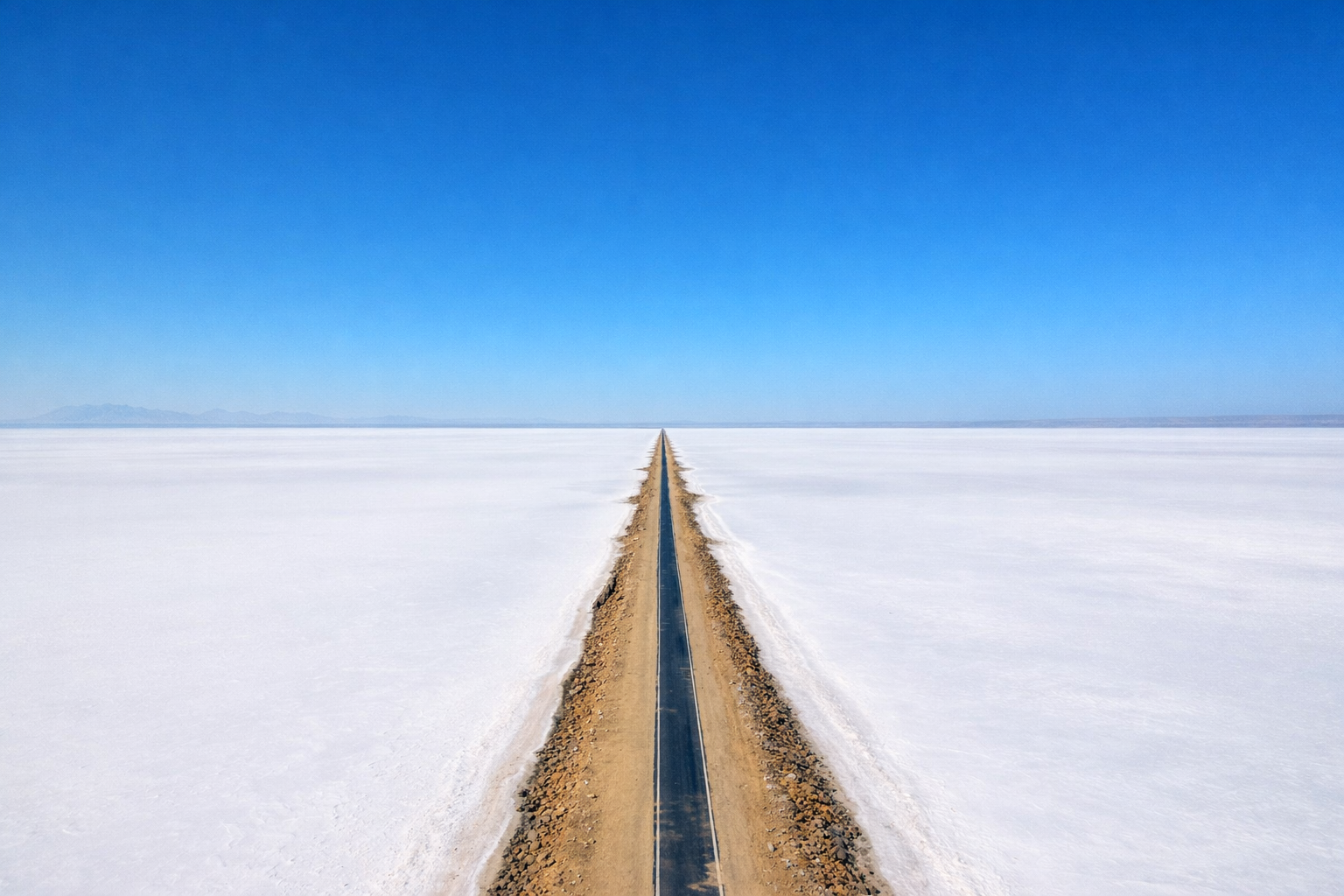
The “Road to Heaven” is a scenic stretch associated with the route between Khavda and Dholavira, where a ribbon of road cuts through the white expanse in a way that looks almost unreal in photos—and feels even stranger when you’re actually driving it.

Here’s how to experience it so it doesn’t become just a quick stop:
Go when the light is kind
- Early morning: the road looks clean and graphic.
- Late afternoon: the salt takes on softer tones, and the horizon feels endless.
Drive it like you’re in a remote place (because you are)
- Keep fuel and water sorted before you start the stretch.
- Don’t count on strong network coverage.
- If you stop for photos, do it safely, without turning the road into a runway of parked cars.
And ask yourself this while you’re there:
When was the last time a road made you slow down—not because of traffic, but because the view felt too large to rush?
Dholavira for the ruins that feel oddly modern
Even if you’re not a “history person,” Dholavira works because it’s not about drama—it’s about design.
The site is UNESCO-listed, and it’s often described as one of the best-preserved urban settlements of its era. But for you as a traveler, the magic is more tactile:
- walking through space that still makes sense as a city,
- seeing water-management features that feel thoughtful rather than mysterious,
- noticing how the layout shapes your movement, even now.
How to visit in a way that feels immersive:
- Arrive earlier than most day-trippers.
- Walk slowly and let the site reveal itself.
- Pair it with a night nearby if you can—the sky here is part of the experience.
Coastal Kutch: beaches, palaces, wind, and shipyards
When you want a break from salt flats and scrubland, the coast is the reset.
Mandvi as the seaside base
Mandvi isn’t trying to be flashy. It’s a working town that happens to have one of Kutch’s most relaxing coastal stretches.
Start with Mandvi Beach in the late afternoon:
- Walk far enough that the snack stalls fade.
- Watch families arrive.
- Let the sea air do what it does best: slow you down without asking permission.
Then make time for Vijay Vilas Palace
This palace visit isn’t only about architecture. It’s also about contrast: ornate design sitting near open coast, the idea of “summer palace” in a place where heat and wind write their own rules.
If you like quieter beaches, add Pingleshwar Beach
It’s described officially as less crowded and also linked to wind farms and wetland characteristics—so it can feel like a mix of beach day and nature stop.
Don’t skip the shipyard walk
Mandvi is known for traditional wooden ship-building culture. Even a short visit near the shipyards changes how you see the town: it’s not just seaside leisure; it’s craft and labor at a coastal scale.
West Kutch loop: forts, temples, salt air, and quiet extremes
If you have extra days—and especially if you like “edge of the map” travel—go west.
This loop is slower, more remote, and deeply rewarding.
Lakhpat Fort for atmosphere and emptiness
Lakhpat is one of those places where silence is part of what you’re “seeing.” Fort walls, open sky, and the sense of a town that once mattered in a different way.
Go in softer light. Walk without rushing. Let the place feel spacious.
Koteshwar Mahadev Temple for the sea-facing spiritual stop
Koteshwar has a coastal-edge feeling—temple energy plus wind and salt.
Even if you’re not there for worship, it’s a powerful “pause” point on a road day.
Narayan Sarovar for pilgrimage + landscape
This is both a sacred site and a geographic shift. The area is often discussed together with the sanctuary landscape around it, making it a good stop for travelers who want nature and culture in the same day.
Mata no Madh for a living pilgrimage rhythm
This temple stop isn’t about “tourist sightseeing.” It’s about stepping into a place that locals still move through with devotion.
Practical tip:
- Dress respectfully.
- Keep your visit calm and unhurried.
- If you’re curious, observe how people enter, pause, and exit. It’s a language of movement.
Offbeat Kutch: the places people miss (and then regret missing)
If you’re traveling with extra curiosity, these are the stops that turn a good Kutch trip into a personal one.
Lyari Riverbed for landscape photography that doesn’t look like “typical Kutch”
This is the kind of place you go to remind yourself Kutch isn’t one texture. Riverbeds here can look sculpted—wide, raw, and strangely elegant.
Dhinodhar Hills for a volcanic-hill viewpoint and pilgrimage feel
Dhinodhar is associated with trekking and a hilltop shrine atmosphere. It’s not as famous as Kala Dungar, but it gives you a different view—and a different sense of Kutch’s terrain.
Fossil hunting, but as a curated visit
There’s a privately assembled fossil collection known as “Kutch Fossil Park” in the Nakhatrana area that some travelers visit as a niche stop. If you’re into geology or natural history, it can be interesting—just treat it like a call-ahead, plan-first visit rather than a guaranteed, fully staffed attraction.
Practical Kutch travel advice that saves real trips
These are the small things that make the difference between “we saw it” and “we enjoyed it.”
Transport realities
- Self-drive gives the most freedom, but roads in remote zones demand patience.
- Driver + car is often the easiest sweet spot for most travelers: you get flexibility without navigation fatigue.
- Distances look short on maps, but stops stretch time—and you’ll want those stops.
What to pack (beyond the obvious)
- Layers (nights can be cold in the Rann)
- Sunscreen + lip balm (salt + wind dries fast)
- Closed shoes for salt flats and uneven ground
- A scarf or buff (wind + dust is real)
- Cash for small villages (don’t assume digital works everywhere)
Food: what to look for
Bhuj is the easiest place for variety. In villages and on highways, keep it simple and hygienic:
- hot tea,
- fresh cooked snacks,
- meals in reputable stays.
If you see locals lining up at a stall, that’s usually your best hint.
Responsible travel (especially in fragile landscapes)
Kutch is resilient, but ecosystems like wetlands and salt flats are not infinite playgrounds.
Do this:
- Keep distance from birds.
- Don’t drive onto sensitive areas.
- Don’t leave plastic “just for a minute.”
- Buy crafts in a way that respects labor—one excellent piece beats five cheap copies.
The Kutch question you should ask yourself before you go
Here it is:
Do I want Kutch as a highlight reel—or as a place I can actually feel?
If you want the second, plan fewer days with more breathing room:
- one extra sunset,
- one unplanned village detour,
- one morning where you don’t rush to “cover” anything.
That’s when Kutch stops being a destination and becomes a memory with texture.
References
- Gujarat Tourism — Great Rann of Kutch: https://www.gujarattourism.com/kutch-zone/kutch/great-rann-of-kutch.html
- Gujarat Tourism — Kalo Dungar (Black Hill): https://www.gujarattourism.com/kutch-zone/kutch/kalo-dungar.html
- Gujarat Tourism — Kutch Museum: https://www.gujarattourism.com/kutch-zone/kutch/kutch-museum.html
- District Administration, Kachchh — Kachchh Museum: https://kachchh.nic.in/tourist-place/kachchh-museum/
- Gujarat Tourism — Hamirsar Lake, Bhuj: https://www.gujarattourism.com/kutch-zone/kutch/hamirsar-lake–bhuj.html
- Gujarat Tourism — Sharad Bagh Palace: https://www.gujarattourism.com/kutch-zone/kutch/sharad-bagh-palace.html
- Gujarat Tourism — Royal Chhatardis: https://www.gujarattourism.com/kutch-zone/kutch/royal-chhatardis.html
- Gujarat Tourism — Smritivan Earthquake Memorial Museum: https://www.gujarattourism.com/kutch-zone/kutch/smritivan.html
- Smritivan Earthquake Memorial Museum (official site): https://www.smritivanearthquakemuseum.com/
- Gujarat Tourism — Mandvi Beach: https://www.gujarattourism.com/kutch-zone/kutch/mandvi-beach.html
- Gujarat Tourism — Vijay Vilas Palace, Mandvi: https://www.gujarattourism.com/kutch-zone/kutch/vijay-vilas-palace.html
- Gujarat Tourism — Pingleshwar Beach: https://www.gujarattourism.com/kutch-zone/kutch/pingleshwar-beach.html
- Gujarat Tourism — Lakhpat Fort: https://www.gujarattourism.com/kutch-zone/kutch/lakhpat-fort.html
- Gujarat Tourism — Koteshwar Temple: https://www.gujarattourism.com/kutch-zone/kutch/koteshwar-temple.html
- Gujarat Tourism — Narayan Sarovar: https://www.gujarattourism.com/kutch-zone/kutch/narayan-sarovar.html
- Gujarat Forest Department — Narayan Sarovar Sanctuary: https://forests.gujarat.gov.in/narayan-sarovar-sanctuary.htm
- Gujarat Tourism — Ajrakh handicraft: https://www.gujarattourism.com/kutch-zone/kutch/ajrakh.html
- Gujarat Tourism — Bhujodi: https://www.gujarattourism.com/kutch-zone/kutch/bhujodi.html
- Gujarat Tourism — Nirona: https://www.gujarattourism.com/kutch-zone/kutch/nirona.html
- Gujarat Tourism — Road to Heaven / Road Through Heaven (Khavda–Dholavira stretch): https://www.gujarattourism.com/kutch-zone/kutch/Kutch.html
- UNESCO World Heritage Centre — Dholavira: a Harappan City: https://whc.unesco.org/en/list/1645/
- Press Information Bureau (India) — Dholavira visitation note: https://www.pib.gov.in/PressReleasePage.aspx?PRID=2107386
- Gujarat Tourism — Dholavira: https://www.gujarattourism.com/kutch-zone/kutch/dholavira.html
- Gujarat Tourism — Kutch Desert Sanctuary: https://www.gujarattourism.com/kutch-zone/kutch/kutch-desert-sanctuary.html
- Gujarat Forest Department — Kutch Bustard Sanctuary: https://forests.gujarat.gov.in/bustard-sanctuary.htm
- Gujarat Tourism — Great Indian Bustard Sanctuary (Naliya): https://www.gujarattourism.com/kutch-zone/kutch/naliya—the-great-indian-bustard-sanctuary.html
- Forest Department, Gujarat (PDF) — Chhari Dhand Wetland Conservation Reserve (declaration details): https://forests.gujarat.gov.in/writereaddata/images/pdf/17_chhari_dhand.pdf
- The Economic Times (Energy) — Dhordo solar village reporting: https://energy.economictimes.indiatimes.com/news/renewable/dhordo-gujarats-fourth-solar-village-achieves-complete-solar-power/124000016
- Government of Gujarat (Information Dept.) — Dhordo solar project press release: https://gujaratinformation.gujarat.gov.in/PressReleaseDetailsL/?DepId=null&DistrictId=35&LanguageId=1&id=21895