
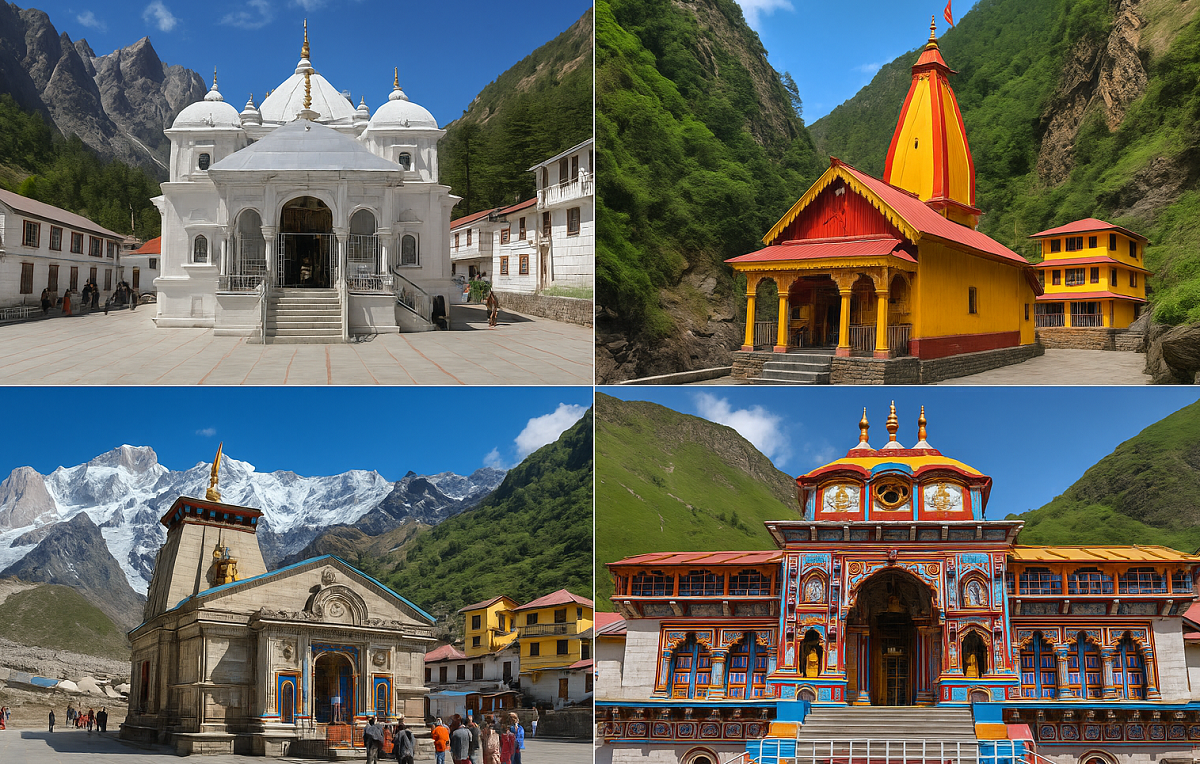
Chota Char Dham Travel Guide: Plan the Perfect Yamunotri–Gangotri–Kedarnath–Badrinath Journey
Looking for a complete, practical, and trustworthy guide to the Chota Char Dham? This is your one-stop plan for Yamunotri, Gangotri, Kedarnath, and Badrinath—what to see, how to connect the four efficiently, when to go, how to register, and where to build flexibility into your schedule. The focus here is your actual trip: detailed routes, trek notes, permits, helicopter options, side trips that add real value, and simple packing guidance that works at altitude.
Table of Contents
What the circuit includes—and how to think about your route
The Chota Char Dham circuit covers four Himalayan shrines in Uttarakhand: Yamunotri, Gangotri, Kedarnath, and Badrinath. Most travelers start from Rishikesh/Haridwar/Dehradun and drive the river valleys clockwise in this order: Yamunotri → Gangotri → Kedarnath → Badrinath. That route flows naturally with the roads and helps you gain altitude progressively before the bigger ascents. If a rare weather window opens for Kedarnath, you can switch the order and return for the rest. The point is to keep logistics realistic and leave room for a buffer day.
Season, registration & essential logistics (do these first)
Season: The shrines open in late spring (around April–May) and close in autumn (around October–November). Monsoon (roughly July–August) brings rain, landslides, and helicopter disruptions; shoulder months (May–June; September–October) generally see steadier travel conditions. Plan buffers—weather can pause roads and flights without much warning.
Mandatory registration: Every pilgrim must register with Uttarakhand’s Tourist Care / TSMS system. It’s free and helps the state manage crowds and emergency support. Complete it online and carry digital/printed copies.
Kedarnath helicopter bookings: If you plan to fly into Kedarnath, book only on IRCTC’s official HeliYatra portal. Avoid intermediaries and look-alike sites; the state has been shutting down fraudulent portals. Weather control rules apply: flights stop if visibility or winds turn risky. Build redundancy into your plan.
How many days do you actually need?
- Focused Kedarnath + one more dham: 6–8 days (with a buffer).
- Full Chota Char Dham: 12–14 days at a humane pace.
- Add high-value detours (Gaumukh, Tungnath–Chandrashila, Mana): 2–4 more days depending on your fitness and weather.
These ranges assume early starts, road discipline in the hills, and a sensible buffer to absorb delays.
Yamunotri: a compact trek with hot springs and high valley views
Base logistics: Drive from Rishikesh/Dehradun to Janki Chatti via Barkot. The road day is long but straightforward. From Janki Chatti, a clearly waymarked trek (about 6 km one way) leads to the temple. Ponies, palkis/dandi/kandi services are available on fixed seasonal tariffs from official counters—use only authorized providers. Start early to beat both sun and queue.
What to see & do:
- Temple darshan followed by time at the thermal springs (be mindful of posted safety and decorum rules).
- Slow the descent: Tea stalls and simple eateries along the route make it easy to space out the return; keep a wind layer handy as shade can turn chilly even in summer.
Planning notes:
- Carry 1–2 L of water and electrolytes; refill at base towns rather than buying singles on the trail.
- If traveling with elders, consider a pre-dawn start or break your day with a light lunch at Janki Chatti to avoid crowd peaks.
Gangotri: road-head temple, riverside walks, and the gateway to Gaumukh
Base logistics: Gangotri is road-accessible from Uttarkashi/Rishikesh. Expect a long hill drive, best done in daylight. The temple sits in a compact town where you can stay, acclimatize, and plan a day walk along the Bhagirathi.
Gaumukh (Gangotri National Park) side trip: If you want a taste of high Himalaya trekking, plan a permit for Gaumukh (and Tapovan if you’re fit and the trail is open). Permits are issued for Gangotri National Park and can be obtained at Gangotri or through the state systems referenced locally; check slot availability and rules close to your dates and travel with a guide if you’re new to glacier terrain. Start early and heed daily turnaround times.
What to see & do:
- Temple darshan with quiet time on the river ghats.
- Easy forest-edge walks upstream/downstream depending on weather and energy.
- If you hold a park permit and conditions allow, Gaumukh day/overnight with a professional guide—rewarding in post-monsoon clarity.
Kedarnath: high-altitude trek or heli, dramatic valley, and meaningful pacing
Approach: Road to Sonprayag, shuttle to Gaurikund. From Gaurikund, the well-marked trek is ~16 km to the Kedarnath temple, with rest shelters, tea shops, and medical posts in season. Many pilgrims break at Guptkashi/Sitapur the night before for a rested start.
Helicopter option: In season—and if weather permits—flights operate from helipads like Phata/Sirsi/Guptkashi (and per current notices, Sonprayag services have also been reported). Book exclusively via IRCTC’s HeliYatra portal. Treat your ticket as a time-saver, not a guarantee; fog or wind can ground fleets for hours or days. Keep an extra day in hand.
On the trail:
- Pace yourself; altitude gain is steady.
- Hire pony/palki/porter from authorized counters if needed.
- Carry layers; afternoons can turn windy and cold even in June.
- Aim to reach by early afternoon to check in, hydrate, and join evening aarti if timings allow.
What to see & do in the valley:
- Temple darshan at quieter pre-dawn hours.
- Bhairavnath Temple (short uphill) for broad valley views.
- Gandhi Sarovar or Vasuki Tal only in good weather with an early start and realistic turnaround; ask locals about trail conditions the night prior.
Critical safety note: Monsoon can shut roads or cause landslides along NH-107 near Sonprayag/Gaurikund. Keep contact with local authorities and expect rolling closures; never push late in the day on exposed sections.
Badrinath: road-head temple, hot springs, and an easy finale with big payoffs
Approach: From Rudraprayag/Joshimath side, the Badrinath road climbs steadily; do it in daylight. The temple town has more accommodation and food options than higher-altitude Kedarnath. Plan a calm evening and a pre-dawn visit the next day.
What to see & do:
- Temple darshan with time at Tapt Kund (follow posted rules).
- Mana village (season-dependent access) for short walks, valley viewpoints, and river confluences.
- If you’re recovering from the Kedarnath trek, Badrinath is a good place to pause for hot meals, laundry, and a real sleep before your descent to Rishikesh/Haridwar.
High-value detours that fit naturally into a Char Dham plan
- Chopta–Tungnath–Chandrashila: A beautiful add-on between Kedarnath and Badrinath. The paved path to Tungnath is ~3 km from Chopta, with an optional ridge push to Chandrashila for wide Himalayan views in clear weather. Avoid in storms or heavy snow unless you’re equipped and experienced.
- Triyuginarayan (near Sonprayag): A serene temple visit that fits neatly on your Kedarnath approach/return day.
- Gaumukh (from Gangotri): See earlier section—permit-bound and best in the post-monsoon window.
Smart itinerary templates (modify around weather)
7–8 days (Kedarnath + Badrinath focus):
- Day 1: Arrive Rishikesh/Haridwar/Dehradun. Complete/verify yatra registration; stock essentials.
- Day 2: Drive to Guptkashi/Phata/Sitapur.
- Day 3: Shuttle to Gaurikund; trek to Kedarnath (or fly if booked). Evening darshan.
- Day 4: Pre-dawn darshan; optional Bhairavnath. Descend to Gaurikund; overnight Sonprayag/Guptkashi.
- Day 5: Drive to Joshimath; rest.
- Day 6: Drive to Badrinath; darshan; explore Mana if open.
- Day 7: Return to Rishikesh/Haridwar.
- Day 8: Buffer day to absorb delays.
12–14 days (Full Chota Char Dham):
- Day 1: Arrive Rishikesh/Haridwar/Dehradun. Registration check.
- Day 2–3: Rishikesh → Barkot → Janki Chatti → Yamunotri trek and back.
- Day 4–5: Janki Chatti → Uttarkashi → Gangotri. Easy walks; consider Gaumukh permits if staying longer.
- Day 6–8: Gangotri → Guptkashi/Sitapur → Kedarnath trek or heli → descend.
- Day 9–11: Badrinath via Joshimath; rest day for recovery and local exploration.
- Day 12–14: Return to Rishikesh/Haridwar with 1–2 buffer days for weather and road contingencies.
Health & altitude: simple rules that keep you moving
- Sleep one night at mid-altitude (e.g., Guptkashi ~1,300–1,500 m) before the Kedarnath push.
- Hydrate early and often; carry electrolytes and avoid sugary overloads.
- Walk at a conversational pace; the route is about time on feet, not speed.
- Know when to turn around. Worsening headache, nausea, or breathlessness at rest are warning signs.
- Plan daylight finishes; Himalayan afternoons are more volatile for wind, rain, and visibility.
(For permits, park rules, and medical posts along the Kedarnath trail, check local instructions once on the ground; they change with season and conditions.)
Transport: the cleanest door-to-door logic
- Fly into Dehradun (Jolly Grant) or reach Haridwar/Rishikesh by rail; continue by road.
- Hill segments are a mix of state buses, shared jeeps, and booked cabs. Start at first light, especially on long days to Gangotri or Badrinath.
- Sonprayag–Gaurikund is shuttle-managed; private vehicles typically halt at Sonprayag. From there, it’s trek or heli for Kedarnath per your plan.
Money, connectivity, and staying powered
- Cash first: ATMs thin out past district hubs; carry small notes for last-mile services.
- Networks fade with altitude and terrain; keep tickets/IDs offline.
- Charging is inconsistent above treeline—bring a power bank and stash electronics warm in a pouch; cold drains batteries fast.
Packing list tuned for Chota Char Dham
- Footwear: Broken-in trekking shoes with traction for Yamunotri/Kedarnath; sandals/slippers for stays.
- Layers: Quick-dry base layer, fleece/light down, rain shell, beanie, gloves; nights are cold even in May–June.
- Water & snacks: 2 L bottle, electrolytes, trail mix, easy carbs.
- Rain plan: Pack cover or poncho that shields your daypack.
- First aid: Personal meds, blister care, ORS; doctor-cleared altitude meds if applicable.
- Documents: Government ID, TSMS registration print/QR, IRCTC heli ticket if flying.
Responsible travel that actually helps on the ground
- Refill, don’t discard: Use refill points and carry trash out.
- Stay on paths—shortcuts erode fragile slopes.
- Hire local services (porters, guides, dhabas); your spend stays in the valley.
- Respect temple rules and local customs; dress modestly in sanctums and obey no-photo zones.
- Verify official notices daily in season (weather pauses, special closures, festival crowd management). Recent examples include ritual closures during lunar eclipses and monsoon-related halts; local bulletins keep you current.
Kedarnath: trek vs. helicopter—how to choose
Pick the trek if you’re reasonably fit, want full immersion, and have a spare buffer day in case your legs ask for an easier pace. The Gaurikund–Kedarnath trail is ~16 km, within the Kedarnath Wildlife Sanctuary, and serviced in season with rest points and basic medical aid.
Pick the heli if time is tight, you’re traveling with elders, or you’re recovering from illness—but book only on the official IRCTC portal and accept that weather may scrub your slot. If that happens, pivot to the road plan and keep the trek as backup. Authorities have actively cracked down on fake booking sites; do not share payments outside official channels.
Common mistakes—and your fixes
- No registration: You’ll be stopped and asked to register; do it online before you leave. Fix: TSMS registration takes minutes.
- Underestimating monsoon risk: Road/heli halts are normal, not exceptional. Fix: buffer 1–2 days and travel in shoulder months when possible.
- Booking heli on wrong sites: Scams spike each season. Fix: use heliyatra.irctc.co.in only.
- Rushing the order: Jam all four into seven days and you’ll spend more time in traffic than at shrines. Fix: pick two or add days.
- Late starts: Afternoon weather is harsher. Fix: pre-dawn transport, early treks, early check-ins.
Quick shrine-by-shrine snapshot you can act on
Yamunotri: Road to Janki Chatti, 6 km trek to temple. Services: ponies/palkis at official counters, tea stalls en route, hot springs near the shrine. Best for a confidence-building start.
Gangotri: Road-head temple town with riverside ghats, market lane, clean views. Add Gaumukh permit if you want a glacier-view trek; read the day’s park advisory before you go.
Kedarnath: Road to Sonprayag, shuttle to Gaurikund, 16 km trek or official heli. Sleep warm, hydrate, and plan a pre-dawn darshan.
Badrinath: Road-head with more lodging and food options; Mana side trip in season, plus easy local walks. A comfortable finale before your descent.
Final checklist (copy into your notes)
- TSMS registration complete; print and digital copies saved.
- Heli (if any) booked only on IRCTC HeliYatra; screenshots and printouts ready.
- Stays blocked in base towns (Uttarkashi/Guptkashi/Joshimath) and strategic hill halts.
- Transport reserved with early departures; one buffer day after Kedarnath.
- Permits checked if adding Gaumukh or other protected treks.
- Health plan set: hydration, electrolytes, light layers, daylight finishes.
References (official and reputable)
- Uttarakhand Tourism – Char Dham overview: https://uttarakhandtourism.gov.in/experiences/char-dham Uttarakhand Tourism
- Uttarakhand Tourism – Yamunotri: https://uttarakhandtourism.gov.in/destination/yamunotri Uttarakhand Tourism
- eUttaranchal (planning info) – Yamunotri trek distance from Janki Chatti (~6 km): https://www.euttaranchal.com/tourism/yamunotri.php eUttaranchal
- Uttarakhand Tourism – Gangotri: https://uttarakhandtourism.gov.in/destination/gangotri Uttarakhand Tourism
- Uttarakhand Tourism – Gangotri National Park (permits): https://uttarakhandtourism.gov.in/destination/gangotri-national-park Uttarakhand Tourism
- Uttarakhand Tourism – Gaumukh–Tapovan trek note: https://uttarakhandtourism.gov.in/treks-details/GANGOTRI%2C%20GAUMUKH%20TO%20TAPOVAN Uttarakhand Tourism
- Uttarakhand Tourism – Kedarnath (trek ~16 km from Gaurikund): https://uttarakhandtourism.gov.in/destination/kedarnath Uttarakhand Tourism
- IRCTC HeliYatra – Official Kedarnath helicopter bookings: https://heliyatra.irctc.co.in/ heliyatra.irctc.co.in
- IRCTC HeliYatra – General passenger instructions: https://heliyatra.irctc.co.in/general-instructions heliyatra.irctc.co.in
- Uttarakhand Tourist Care (TSMS) – Yatra registration user manual: https://registrationandtouristcare.uk.gov.in/images/TSMS-RegistrationProcess.pdf registrationandtouristcare.uk.gov.in
- India.gov.in – Char Dham/Hemkund registration service page: https://services.india.gov.in/service/detail/apply-online-char-dham-yatra-and-hemkund-sahib-registration-uttarakhand-1 India Government Services
- Uttarakhand Tourism – Badrinath: https://uttarakhandtourism.gov.in/destination/badrinath Uttarakhand Tourism
- Uttarakhand Tourism – Chopta–Tungnath–Chandrashila (trail details): https://uttarakhandtourism.gov.in/treks-details/Chopta-Chandrashila%20Trek Uttarakhand Tourism
- Times of India – Monsoon disruptions & safety context (Kedarnath route): https://timesofindia.indiatimes.com/city/dehradun/2000-pilgrims-rescued-from-kedarnath-route-after-landslide-yatra-to-remain-affected-for-3-days/articleshow/123003718.cms The Times of India
- Times of India – Heli booking fraud crackdown (use official portal only): https://timesofindia.indiatimes.com/city/dehradun/ukhand-stf-blocks-142-websites-117-numbers-used-for-char-dham-heli-booking-fraud/articleshow/122166140.cms The Times of India
- Times of India – Occasional ritual closures (e.g., lunar eclipse): https://timesofindia.indiatimes.com/city/dehradun/char-dham-shrines-major-temples-closed-during-lunar-eclipse/articleshow/123750562.cms The Times of India
Operational details—like precise opening/closing dates, daily puja times, temporary road blocks, or helicopter schedules—change during the season. Always confirm the latest notices on the official portals above before you travel.


