
Jaipur Travel Guide: Best Places to Visit, Smart Itineraries, Local Food, Shopping & Planning Tips
Jaipur blends palace pomp with everyday Rajasthan—lanes piled with block-printed textiles, spice-perfumed bazaars, temples thrumming with aarti bells, and sandstone forts that watch the city from the Aravalli hills. Planning a real trip here? This guide is written to help you do Jaipur—not just dream about it. You’ll find the most worthwhile sights (famous and quiet), how they fit together on the ground, costs you should expect, mistakes to avoid, where to eat, how to get around, and how to string everything into crisp one-, two-, and three-day plans.
Table of Contents
Quick planner (read this first)
- Best time to visit: October–March is ideal for dry, pleasant weather. April–June is very hot; July–September is monsoon. Jaipur’s climate data (temperatures and rainfall) comes from the India Meteorological Department; winter days are mild, summer peaks run very hot, and rain concentrates in the monsoon months.
- How long? If you only have 1 day, focus on the Old City and Amber Fort. 2 days adds the hill forts and museums. 3–4 days lets you explore stepwells, gardens, printing workshops, and longer meals.
- Where to stay:
- Old City (Pink City): Walk-to-everything convenience; lively, noisy.
- C-Scheme / MI Road: Central, great for restaurants and cafés.
- Bani Park / Civil Lines: Leafy and quieter; good mid-range heritage hotels.
- Mansarovar / Jagatpura (near airport): Handy for early flights; less atmospheric.
- Getting around: Use app taxis (Uber/Ola) and autos, Jaipur Metro for a few key corridors (e.g., Pink Line to Chandpole/Sindhi Camp), and occasional city buses. Jaipur Metro Rail Corporation publishes official route, timings, and extensions.
- Airport transfer: There’s no public bus/metro to the airport gates as of the latest official FAQ. Use the prepaid taxi counter or app cabs; it’s a short hop into town.
- Admissions: Most monuments have modest entry fees; a 2-day composite “Jaipur Darshan” ticket sold by the Rajasthan government can be good value if you’re packing in multiple sights. Buy it on the official OBMS portal.
- Cash & payments: Cards and UPI QR codes are widely accepted in Jaipur; UPI adoption is driven by the National Payments Corporation of India and allied programs (e.g., FSSAI’s certified food hubs often showcase digital payment hygiene). Bring some cash for smaller vendors.
- Dress & etiquette: Shoulders/knees covered for temples; remove shoes before entering shrines; ask before photographing people.
- Photography & drones: Tripods and drones are restricted or require prior written permission at protected monuments—don’t risk it. India’s DGCA also requires compliance via the Digital Sky platform.
The essential sights (and exactly why they’re worth your time)
1) Hawa Mahal (Palace of Winds)
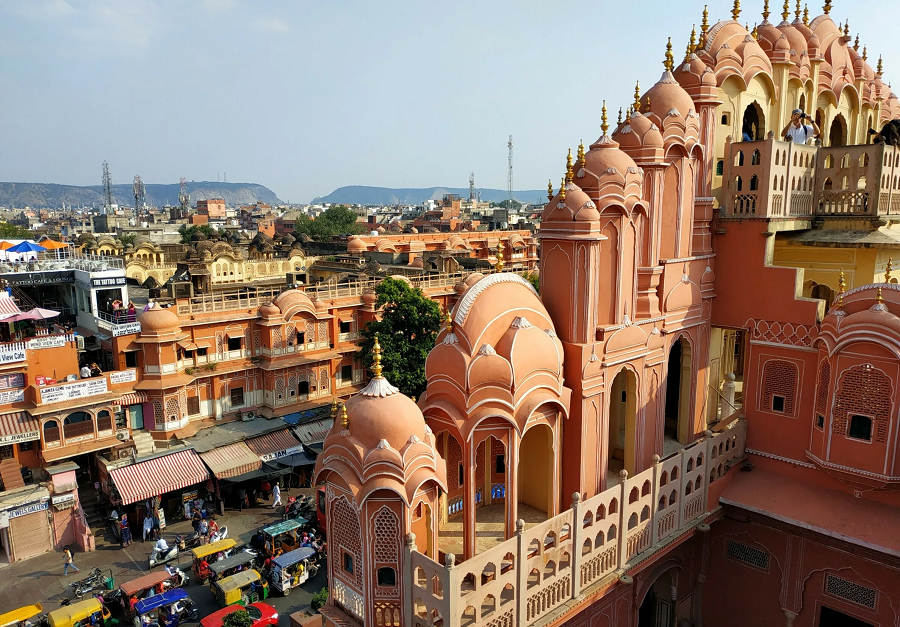
If you’ve seen one Jaipur photo, it’s probably this five-tiered screen of rose-pink jharokhas. Go early morning for soft light on the honeycomb façade; then climb inside to the top terraces and look out over Badi Chaupar. Hawa Mahal is included on the state’s official attractions portal (which lists practical details and ticketing links), and it’s covered by the composite ticket along with several other major sights.
Planning tip: The best full-frontal photos are from the cafés directly opposite. If you go inside later, you’ll escape the street crowds and get sweeping Old City views.
2) City Palace (including Pritam Niwas Chowk)
This still-royal complex houses courtyards, armories, textiles, and the Peacock Gate in Pritam Niwas Chowk—Jaipur’s most ornate doorway. Ticketing tiers range from museum access to premium palace experiences on the official City Palace site, so check inclusions before you book.
Don’t miss: The small galleries change exhibits; if you love decorative arts, linger. For photos, mind the staff-only ropes in Pritam Niwas Chowk.
3) Jantar Mantar (UNESCO)
Across from City Palace, this open-air observatory turns astronomy into sculpture: stair-stepped sundials and planetary instruments you can stand beside. The official booking page lists hours and fees; go with a guide if you want the instruments decoded quickly.
4) Govind Devji Temple (Old City)
This is Jaipur’s spiritual heartbeat. The aarti schedule here is a local ritual; time your visit for one of the seven daily darshans to see the courtyard fill with devotees. Check the temple’s official channels for current timings (they shift with seasons).
5) Amber (Amer) Fort
Built on a hill above Maota Lake, Amber is the showstopper: mirror-studded Sheesh Mahal, frescoed halls, and courtyards with lake and valley views. Daytime hours (and night-viewing/sound-and-light show schedules) are published on state and tourism portals; they update seasonally.
How to reach the top: Walk 10–15 minutes uphill, take a shared jeep/golf cart from the parking area, or drive up via the fort road. If anyone suggests elephant rides, know that they operate for short morning windows and remain controversial on welfare grounds; choosing a jeep or walking is the ethical (and faster) option—and new fees and caps continue to change.
Side stops around Amber:
- Panna Meena ka Kund (stepwell) for geometric photos—view respectfully from the edges; it’s a heritage water structure.
- Anokhi Museum of Hand Printing (in a restored haveli) for block-printing demos and short workshops.
- Shila Devi Temple inside the fort for a quick traditional visit.
6) Jaigarh Fort
Sitting above Amber, this rugged fort has ramparts with huge Aravalli views and the famous Jaivana cannon. It’s usually quieter than Amber and pairs well in a single outing via the connecting road. Practical details—including posted hours and fees—are widely published; expect broad daylight hours.
7) Nahargarh Fort
Come for the sunset: the city unwraps below in a grid of pink, cream, and neon. The ramparts, Stepwell-style Padao viewpoint, and the Madhavendra Bhawan suites are the big draws. If you’re taking a cab, arrange a round-trip or confirm a pick-up; autos thin out after dusk.
8) Jal Mahal (Water Palace)
You can’t tour the interior, but the moody views from the Man Sagar Lake promenade are perfect at dawn and dusk. Combine this with Amber or the hill forts; it’s on the same axis.
9) Albert Hall Museum & Ram Niwas Garden
A 19th-century Indo-Saracenic showpiece with everything from Rajasthani textiles to an Egyptian mummy, plus a night-time illumination that lights the façade. Pair it with a snack-centric detour to Masala Chowk, the open-air food court inside Ram Niwas Garden that’s achieved “Clean Street Food Hub” certification.
10) Birla Mandir (Laxmi Narayan Temple)
A bright white marble temple that’s wonderfully serene in the early evening. Official and tourism pages outline typical opening windows; plan around the short mid-day closure.
11) Galtaji (Monkey Temple)
A string of pale-pink shrines tucked into a gorge east of the city, with stepped tanks and macaques on ledges. Arrive early to avoid the heat, bring small notes for caretakers, and keep snacks zipped away. Hours are long (roughly dawn to dusk) with no formal ticket barrier.
12) Stepwells, gardens, and quiet corners
- Sisodia Rani Garden & Vidhyadhar Garden: Painted pavilions, tiered lawns, and cool arcades—great for an hour of shade between Old City sightseeing bursts. The composite ticket often covers entry; check the OBMS portal before you go.
- Gatore ki Chhatriyan: Beautifully carved royal cenotaphs in a serene bowl beneath Nahargarh.
- Central Park & Statue Circle: Early-morning walkers, parakeets, and a dose of city life.
- Patrika Gate & Jawahar Circle: Instagram’s favorite archway, framing a public garden ring—go at sunrise for space.
What to do (beyond just “seeing” places)
Walk the bazaars like a local
Start at Badi Chaupar and Hawa Mahal Road, then drift into Johari Bazaar (jewelry), Bapu Bazaar (textiles), and Tripolia Bazaar (lac bangles, brass). For fixed-price, quality-checked crafts, try the state-run Rajasthali emporium—useful if you’re wary of bargaining or gem authenticity claims.
Gemstone caution: “I know a workshop—best price” is a classic opener for scams across India. Government advisories flag jewelry and carpet cons; insist on receipts, certifications, and your own independent appraisals if you’re considering fine jewelry.
Learn block printing in Bagru or Sanganer
A half-day hands-on session makes you appreciate the textiles you see everywhere; you’ll stamp your own scarf with teak blocks and natural dyes. Pair it with the Anokhi Museum visit near Amber.
Catch a festival
Jaipur’s calendar is busy—Kite Festival (Makar Sankranti) in January, Jaipur Literature Festival (usually Jan/Feb), springtime Gangaur, monsoon Teej, and the Jaipur International Film Festival. Confirm dates on official pages—they shift every year.
Eat your way across the city
See the food section below, but anchor your day with: breakfast pyaaz kachori (Rawat, near Sindhi Camp), a dal-baati-churma lunch, late-afternoon masala chai by MI Road, and a ghevar sweet to finish. Rajasthan’s tourism pages lay out the state’s signature dishes if you want a checklist.
Where (and what) to eat
Jaipur has two delicious speeds—street-side and heritage-hotel leisurely—and you should try both.
Street & casual:
- Masala Chowk inside Ram Niwas Garden gathers beloved stalls (kachori, pav bhaji, chaat) in one place with seating, lighting, and FSSAI-audited hygiene under India’s “Clean Street Food Hub” program. Evening is buzzy, and the illumination across at Albert Hall is a bonus.
- LMB (Laxmi Misthan Bhandar) in Johari Bazaar for sweets and vegetarian thalis.
- Rawat Mishthan Bhandar for pyaaz kachori.
Sit-down Rajasthani:
- Try a dal-baati-churma platter at a dedicated thali house; Rajasthan Tourism explains why this dish is the state’s edible identity.
Splurge with a setting:
- 1135 AD inside Amber for regal ambience (book ahead, pair with the fort’s night illumination).
- Heritage hotel restaurants around Rambagh/Civil Lines for candlelit lawns.
Vegetarian travelers will find menus friendly; meat-eaters can look for laal maas (chili-rich mutton curry) on traditional menus. For water, stick to sealed bottles or filtered refills; skip ice at basic stalls.
Smart itineraries (fit these to your arrival/departure)
One perfect day in Jaipur (first-timers)
- Morning: Old City walk—Hawa Mahal façade at sunrise → climb inside when it opens → short walk to Jantar Mantar → City Palace (prioritize Pritam Niwas Chowk, textiles, arms gallery).
- Lunch: Thali in the Old City.
- Afternoon: Drive to Amber; explore the fort (Sheesh Mahal, Ganesh Pol) → optional Jaigarh right after if you want a quieter rampart stroll.
- Sunset: Stop at Jal Mahal on the way back.
- Dinner: Masala Chowk or MI Road, depending on your energy.
Two days (history + crafts)
- Day 1: Old City core (above) + Albert Hall at dusk + Birla Mandir evening aarti.
- Day 2: Amber area plus Panna Meena ka Kund and Anokhi Museum → back in town for Gatore ki Chhatriyan or Sisodia Rani Garden → Nahargarh for sunset.
Three to four days (slow Jaipur)
Add a Bagru/Sanganer block-printing workshop, Jawahar Circle/Patrika Gate sunrise, Galtaji early morning, shopping time for handlooms and blue pottery, and longer café meals around C-Scheme.
Tickets, passes, and hours (what most people get wrong)
Composite ticket: The state’s OBMS portal sells a 2-day Jaipur Darshan combo that covers multiple monuments (including Amber, Hawa Mahal, Jantar Mantar, Albert Hall, Sisodia Rani Garden, and more). It’s the easiest way to avoid multiple lines and can be excellent value if you’re seeing 4–5 sights in two days. Always check inclusions, validity, and current prices before purchase.
Individual bookings:
- Amber Fort publishes hours and lists the light-and-sound show (English/Hindi) on official tourism channels; times vary by season.
- Jantar Mantar and Hawa Mahal times are posted on official/state pages.
- City Palace uses dynamic ticket tiers on its own official website (from museum entry to premium palace rooms).
Pro tip: If you’re planning Amber and Jaigarh and Nahargarh on one day, start at Amber the moment it opens, then drive up to Jaigarh, and save Nahargarh for golden hour. You’ll dodge the tightest crowds and turn that day into a scenic arc.
Getting there & around (planes, trains, buses, and taxis)
- By air: Jaipur International Airport (JAI) has domestic and some international connections. For now, there’s no direct public bus/metro link from the airport; take a prepaid taxi (counter in arrivals) or book Uber/Ola for fixed-fare rides into the city (15–30 minutes to central areas, traffic permitting).
- By train: Jaipur Junction is a major stop with fast connections from Delhi—look for Vande Bharat and Shatabdi services on the official Indian Railways enquiry portals to check schedules and running times.
- By road: The Delhi–Jaipur sector keeps getting faster thanks to expressway upgrades; if you’re self-driving, expect tolls and variable last-mile traffic as you enter the city.
Within Jaipur:
- Jaipur Metro (Pink/Orange Line): Useful if your base or plans align with stations like Chandpole, Sindhi Camp (for intercity buses), and newer extensions. See JMRC for first/last trains, stations, and alerts.
- City buses: JCTSL runs a wide network of low-floor buses; they’re inexpensive but not always faster than cabs for visitors.
- Taxis & autos: App rides are affordable; agree on or confirm metered/estimated fares if you hail an auto on the street.
- Airport tip: Given the lack of public transport to the terminal, budget for a cab both ways if you’re catching dawn flights.
What it costs (realistic ranges)
- Admissions: Expect ₹50–₹300 for many individual monuments for Indian nationals and higher for foreign visitors; museums/observatories sit in the same band. If you’ll see 4+ sights, the composite ticket quickly pays for itself.
- In-city rides: Short auto rickshaw hops ₹80–₹200; app cabs for cross-town trips ₹200–₹500 depending on time and traffic.
- Meals: Street snacks ₹50–₹150, casual lunches ₹250–₹600 per person, atmospheric heritage dinners ₹1,200+ per person with drinks.
- Ballooning/experiences: Seasonal hot-air balloons and curated experiences cost more; book with licensed operators and confirm insurance.
Safety, etiquette & responsible travel
- Heat & hydration: Summers are punishing; carry water, a hat, sunglasses, and plan indoor breaks mid-day. Jaipur’s climate normals back up the seasonal swing—build your pacing accordingly.
- Scams: The gem “investment” pitch and “my uncle’s carpet factory” invitation are textbook. Government advisories specifically warn about such approaches; decline politely and walk on. Buy only from shops you choose, not ones you’re steered to by “helpers.”
- Temple etiquette: Dress modestly, remove footwear, keep voices low during aartis.
- Drones/tripods: Don’t fly drones or set up tripods at protected monuments without written permission. The ASI’s published dos & don’ts and India’s DGCA rules apply nationwide.
- Elephant rides: If offered, say no. Welfare concerns and changing regulations aside, jeeps or walking are quicker and kinder—and give you flexibility on time.
- Wildlife day trips: For Ranthambore safaris (a popular add-on from Jaipur), book only via the state forest department portals or reputable agents, carry the ID used for booking, and follow park guidelines strictly.
Food you shouldn’t leave without trying
- Dal-Baati-Churma: The state’s signature—roasted wheat baati, dal, and sweet churma—hearty and comforting.
- Laal Maas: Fiery mutton curry with red chilies—pair with bajra roti.
- Ker Sangri: Desert beans and berries in a tangy, spiced stir-fry.
- Pyaaz Kachori: Flaky pastry stuffed with spiced onions; breakfast classic.
- Ghevar & Mawa Kachori: Festival sweets (ghevar peaks around Teej).
- Masala Chowk samplers: An easy way to try multiple standards with cleaner seating.
Shopping that’s actually worth it
- Block-printed cottons: Bagru and Sanganer styles; look for natural dyes and tight, even prints.
- Blue pottery: A Jaipur hallmark (glazed, low-fired, Persian-influenced). Rajasthan’s GI documentation recognizes blue pottery as a craft identity for the region.
- Gemstones & jewelry: Jaipur is a cutting hub, but quality varies. Buy from established jewelers, insist on lab certificates, and never rush big purchases.
- Mojari (leather juttis) & lac bangles: Browse Tripolia and Bapu Bazaar; check stitching, insole comfort, and whether dyes bleed.
For a single stop with transparent pricing, Rajasthali (state emporium) is reliable and good for gifts.
Day trips from Jaipur (if you have an extra day)
- Abhaneri (Chand Baori): One of India’s most dramatic stepwells; visit en route to/from Agra. Hours and fees vary by source—go in daylight and budget an hour.
- Sambhar Salt Lake: Bleached pans, mirage light, and winter birdlife; Rajasthan Tourism’s brochure has useful context. Go with a driver who knows the tracks.
- Ajmer & Pushkar: Ajmer Sharif Dargah and lakeside Pushkar make a good paired circuit.
- Samode: A heritage village/palace loop north of Jaipur for frescoed havelis and village lanes.
Connectivity, money & practicalities
- SIM & data: You’ll find telecom shops across the city (passport/ID required). eSIMs for India are easy to buy online before departure.
- UPI & cards: Most cafés, shops, and even market stalls accept QR payments. NRIs from several countries can now link international numbers to UPI through select Indian banks; travelers with Indian accounts will find UPI near-universal. Carry some cash for kiosks and temple offerings.
- Language: Hindi and Rajasthani are common; English is widely understood in tourism areas.
- Power: India uses Type C/D/M plugs (230V).
- Tipping: Round up small bills for autos; 5–10% in restaurants is appreciated if service isn’t included.
Accessibility notes
Many historic sites involve uneven stone, staircases, and narrow passages. City Palace has the best mix of ramps and courtyards for wheelchair users; Hawa Mahal and Amber involve multiple stairs. If accessibility is a priority, plan extra time and choose ground-floor galleries and open courtyards, and consider hiring a car for door-to-door drop-offs.
When Jaipur is at its best (and busiest)
- Weather sweet spot: November–February brings crisp mornings and sunny afternoons; pack a light jumper for evenings.
- Festival spikes: JLF and kite festival (mid-January) fill hotels; book early.
- Holi/Diwali: Magical in Rajasthan but some venues close or run short hours—double-check before you go.
Putting it all together (a sample 3-day plan with timing)
Day 1 — Old City + Amber:
Sunrise Hawa Mahal photos → Hawa Mahal interior → Jantar Mantar (1 hr) → City Palace (2 hrs) → lunch nearby → cab to Amber (2–3 hrs inside) → short stop at Panna Meena → Jal Mahal promenade at sunset → dinner at Masala Chowk.
Day 2 — Hill forts & museums:
Albert Hall (10–11 am) → Ram Niwas Garden chai break → Birla Mandir (quiet midday visit) → late-afternoon Nahargarh for sunset views → dinner around C-Scheme.
Day 3 — Crafts & gardens:
Bagru block-printing workshop (half day) → Gatore ki Chhatriyan → Sisodia Rani Garden → shopping in Bapu/Johari bazaars → evening aarti at Govind Devji.
Final tips locals quietly swear by
- Start early: Most monuments open around 8–9 am. You’ll beat both heat and crowds.
- Group your days by geography: Old City sights cluster; Amber/Jaigarh/Jal Mahal sit on one axis; Galtaji and the gardens lie to the east.
- Carry small notes: For autos, temple offerings, and minor tips.
- Respect the lines & ropes: Especially in palaces—guards are strict, and for good reason.
- Be skeptical of “shortcuts” and “special access”: If it isn’t advertised on an official page, assume it’s not legit.
References & official resources
(For clarity and trust, these are the primary sources used for practical details. Always re-check hours and ticketing close to your visit—they can change with seasons and events.)
- Rajasthan Government OBMS (Official Booking Portal): Jaipur Darshan composite ticket and individual monument listings — https://www.obms-tourist.rajasthan.gov.in/ OBMS Tourist Portal
- OBMS — Hawa Mahal listing: Hours, overview — https://obms-tourist.rajasthan.gov.in/place-details/Hawa-mahal OBMS Tourist Portal
- Amber Fort / Sound & Light (tourism & tickets): https://amberfort.org/ ; state tourism light-and-sound listing — https://www.tourism.rajasthan.gov.in/ Jaipur Literature Festival+1
- City Palace (official site & tickets): https://www.citypalacejaipur.com/ Jaipur Literature Festival
- Jaigarh Fort (hours & fees published): https://jaipurtourism.co.in/jaigarh-fort-jaipur (commonly referenced practical timings) Jaipur Tourism
- Rajasthan cuisine overview (official tourism): https://www.tourism.rajasthan.gov.in/content/rajasthan-tourism/en/rajasthani-cuisine.html Rajasthan Tourism
